Why Standard CRMs Miss the Mark for Barn Conversions
Most CRM systems are built for simple sales cycles. Lead comes in, you qualify them, send a quote, close the deal. That works fine if you're selling software or running a plumbing business with same-day fixes.
Barn conversions don't work that way. Your sales cycle runs 6-12 months from initial enquiry to contract signing. Between the first site visit and project commencement, you might have planning applications, structural surveys, heritage assessments, and detailed design phases. Each stage involves different stakeholders and different documentation requirements.
The regulatory complexity alone breaks most standard systems. You need to track whether a building was in agricultural use before March 2013. Whether it sits in a conservation area. Whether the proposed conversion exceeds 865 square metres across five dwellings. Whether the existing structure can handle conversion without major rebuilding.
Try managing that level of detail in a basic CRM built for simple product sales. You'll end up with notes fields full of critical information that nobody can find when they need it.
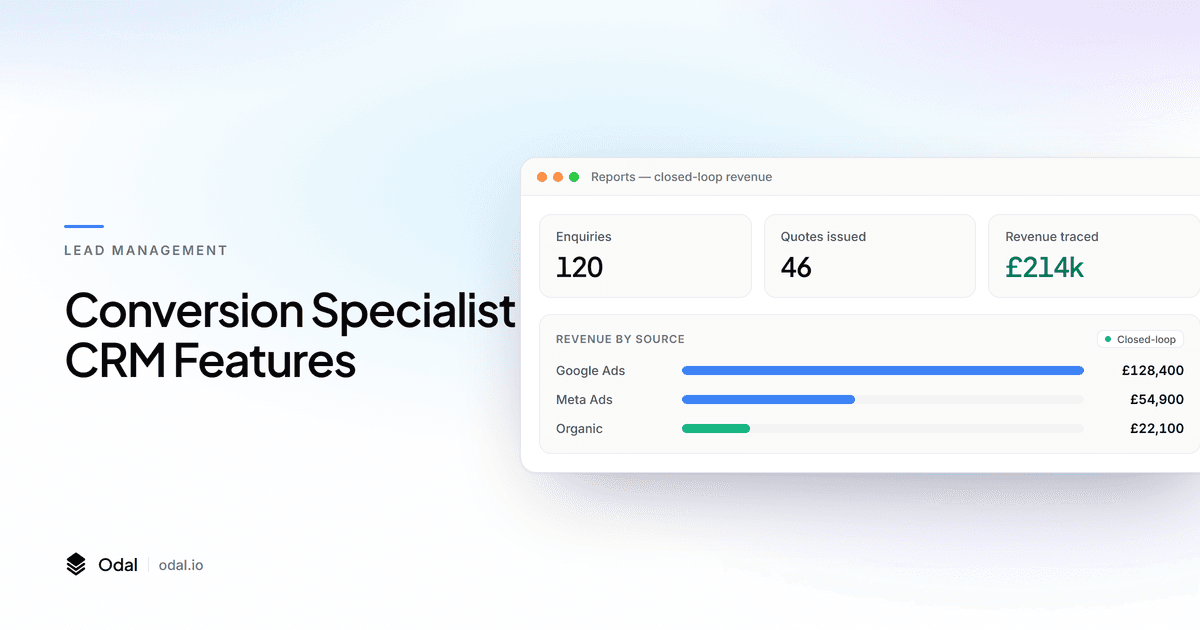
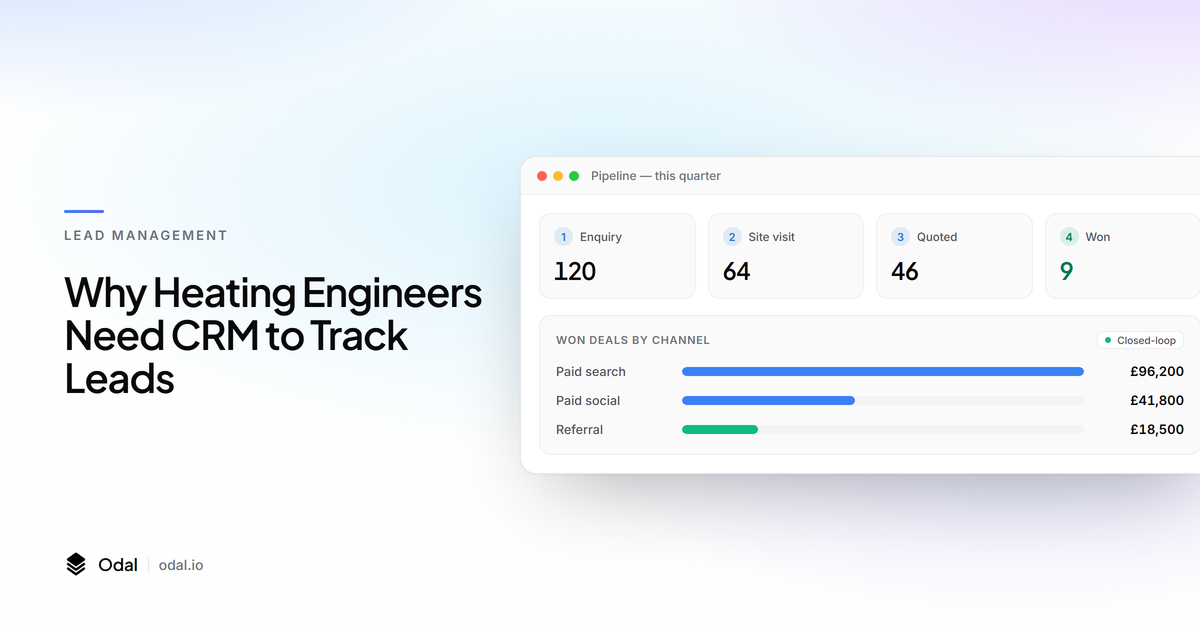
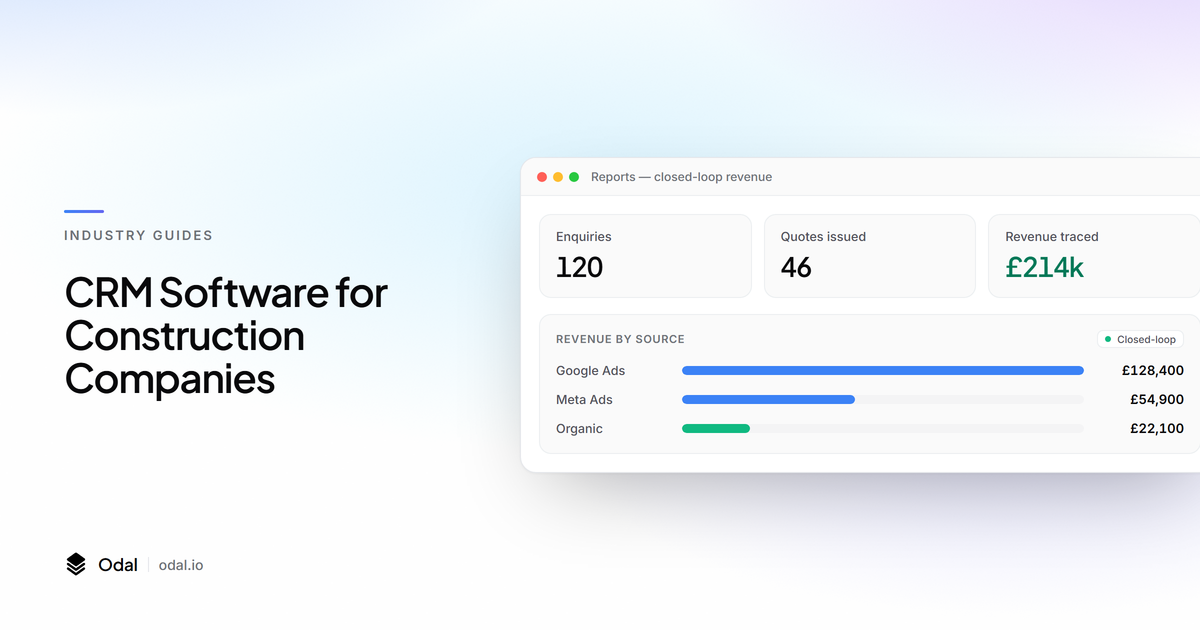
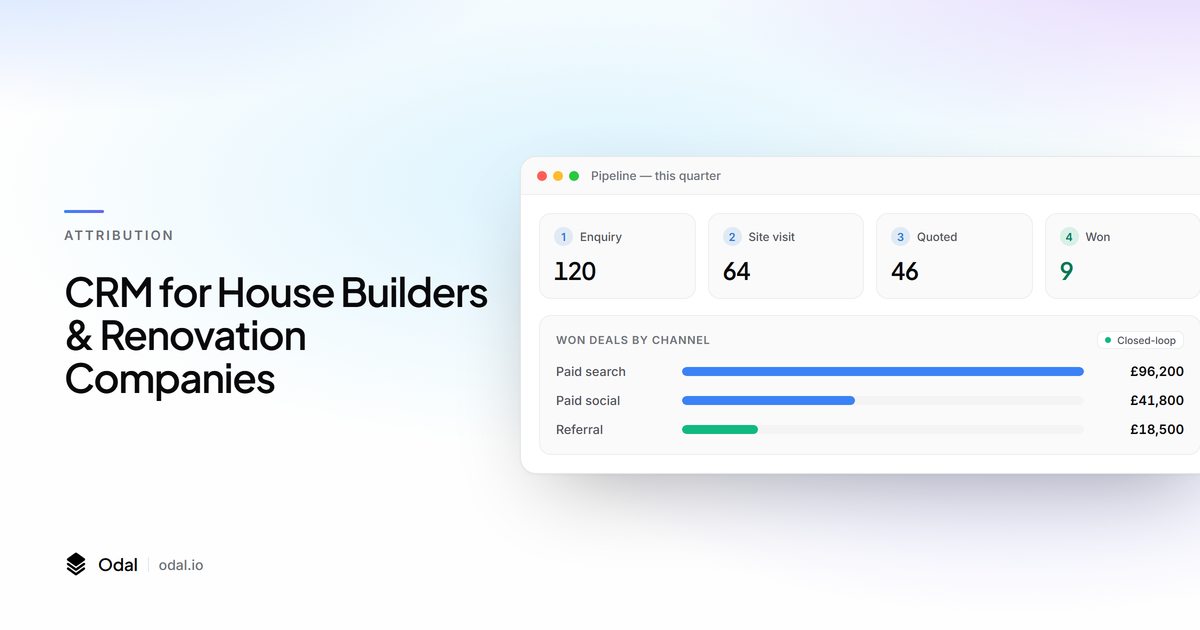
The Attribution Problem: Where Did That £400k Contract Come From?
This is the commercial reality most barn conversion specialists face: you spend money on marketing across multiple channels. Google Ads for "barn conversion specialists", Facebook ads showcasing completed projects, maybe some trade publication advertising. Enquiries come in through various routes. Some convert to site visits. Some of those convert to detailed quotes. Some of those convert to signed contracts months later.
But can you tell which marketing channel produced that £400,000 contract you signed last month? Can you identify which enquiry source delivers the highest-value projects? Can you track the conversion rate from initial enquiry to signed contract across different lead sources?
Most barn conversion businesses can't answer these questions because their systems don't connect marketing data to revenue outcomes. They know their cost per enquiry, but they don't know their cost per signed contract. They can see which marketing channels generate the most leads, but not which channels generate the most profitable projects.
This isn't just about reporting. It's about commercial intelligence that determines where your next marketing pound should go.
What Barn Conversion Specialists Actually Need
The CRM requirements for barn conversion specialists go beyond basic contact management. You need systems that handle the specific realities of your business model.
Extended timeline tracking that maintains visibility across 12-18 month project cycles. When a prospect makes initial contact in January and signs a contract in September, your system needs to maintain that connection and track every touchpoint in between.
Multi-stakeholder communication management. Your projects involve property owners, family members who influence decisions, architects, structural engineers, heritage consultants, planning authorities, and specialised contractors. Your CRM needs to track who needs what information when, without creating communication chaos.
From what we see across the barn conversion specialists we work with, the businesses that get this right are the ones that can scale without losing project quality or client service standards.
The Financial Complexity
Barn conversion projects present unique financial management challenges that basic CRMs can't handle. Your pricing isn't straightforward. You might offer basic structural conversion packages alongside luxury heritage restoration options. Clients often upgrade specifications during the design phase. Variation orders are common as structural realities become clear.
Tiered pricing presentation becomes crucial when you're helping clients understand the difference between a £250,000 basic conversion and a £600,000 heritage restoration with period features and sustainable technology integration.
Progress tracking across extended timelines requires sophisticated deal management capabilities. You're not managing simple one-off transactions. You're coordinating milestone payments, retention amounts, and variation orders whilst maintaining cash flow throughout 12-18 month project cycles.
Lead Qualification and Pipeline Reality
Not every barn conversion enquiry represents a genuine opportunity. Some property owners are exploring options without serious intent to proceed. Others have unrealistic budget expectations. Some properties aren't suitable for conversion under current regulations.
Effective lead qualification for barn conversions requires understanding property characteristics, budget parameters, timeline expectations, and decision-making processes. Your CRM needs to capture and organise this information systematically.
The qualification process itself often spans multiple interactions. Initial phone enquiry. Site visit and feasibility assessment. Detailed discussion of options and pricing. Planning application support. Design development. Contract negotiation. Each stage requires different information and different stakeholder involvement.
Your pipeline tracking needs to reflect these realities rather than forcing barn conversion sales processes into generic opportunity stages designed for simple product sales.
Visual Portfolio Management
Barn conversion sales rely heavily on visual demonstration of previous work. Clients need to see how you've handled similar properties. They want to understand the transformation potential of agricultural buildings. They need confidence in your ability to preserve heritage character whilst creating modern living spaces.
This visual content needs to be easily accessible during client meetings and integrated into your sales process.
Mobile Accessibility for Rural Properties
Barn conversion work happens in rural locations where internet connectivity can be patchy and site visits are essential parts of the sales process. Your CRM needs to function effectively on mobile devices for data capture and client communication.
Site updates and client communication need to work from remote locations. When you're conducting a feasibility assessment on a 17th-century barn in rural Yorkshire, you can't wait until you're back in the office to update project records.
Mobile functionality becomes particularly important for maintaining project momentum during extended timelines. Clients expect regular updates. Planning authorities require prompt responses to queries. Contractors need coordination across multiple concurrent projects.
Integration with Existing Workflows
Most barn conversion specialists already use various tools for different aspects of their business. Your CRM needs to work alongside these existing workflows rather than requiring wholesale system replacement.
Measuring What Matters: Beyond Lead Volume
Most barn conversion specialists track basic metrics like enquiry volume and quote conversion rates. But these surface-level measurements don't reveal the commercial intelligence needed for effective marketing spend allocation.
Revenue attribution becomes the critical measurement. Which marketing channels produce the highest-value contracts? What's the true cost per acquisition when you account for the extended sales cycle? How do conversion rates vary by property type, location, or project value?
Lead quality metrics matter more than lead volume. An enquiry from someone with a suitable property, realistic budget, and clear timeline expectations is worth more than ten enquiries from people exploring options without serious intent to proceed.
Project profitability analysis across different client types and project specifications helps optimise your service offerings. Some types of barn conversion projects deliver better margins. Some client profiles present fewer complications. Your CRM should capture this intelligence systematically.
The Technology Evolution
CRM technology for construction specialists continues evolving with increasing integration of mobile-first design and industry-specific functionality. Some platforms now incorporate satellite imagery for preliminary site assessment. Others offer enhanced project visualisations that help clients envision completed conversions.
The trend toward industry-specific solutions reflects the unique requirements of specialised construction businesses. Generic CRM platforms adapted for construction use often miss the nuances that matter for barn conversion specialists.
Implementation Reality Check
Successful CRM implementation for barn conversion specialists requires careful system selection based on specific business requirements rather than generic feature lists. The most sophisticated platform won't deliver results if it doesn't match your actual workflows and information needs.
Training and adoption become critical success factors, particularly in construction environments where technology adoption may face resistance. User-friendly interfaces and comprehensive training resources are essential for achieving the efficiency gains that justify CRM investment.
The goal isn't implementing technology for its own sake. It's creating systems that connect marketing spend to revenue outcomes, improve project management efficiency, and enhance client satisfaction throughout extended conversion timelines.
Most barn conversion specialists who successfully implement CRM systems report improved conversion rates, reduced administrative overhead, and enhanced ability to scale their businesses without losing project quality or client service standards. The increasing pressure on rural infrastructure from barn conversion developments makes efficient project management even more crucial for maintaining community relationships and regulatory compliance.
If you're ready to connect your marketing spend to actual signed contracts, and gain visibility into which channels deliver the highest-value projects, start your free Odal trial. See exactly which enquiries turn into revenue, track your true cost per acquisition across extended sales cycles, and optimise your marketing spend based on actual project outcomes rather than surface-level metrics.
Frequently Asked Questions
How long does it typically take to implement a CRM system for a barn conversion business?
Implementation timelines vary based on business size and system complexity, but most barn conversion specialists see initial benefits within 4-6 weeks. The key is starting with core functionality like lead tracking and project documentation, then expanding capabilities as your team becomes comfortable with the system.
Can a CRM system help with Class Q planning permission tracking?
Yes, effective CRM systems can track regulatory requirements including Class Q criteria like agricultural use history, structural integrity assessments, and size restrictions. The system should store relevant documentation and flag compliance requirements throughout the project lifecycle.
What's the typical ROI for CRM implementation in barn conversion businesses?
Most barn conversion specialists see ROI through improved conversion rates (typically 15-25% increase), reduced administrative time (10-15 hours per week), and better project margin management. Given the high project values in barn conversions, even small efficiency improvements deliver significant financial returns.
How do you handle the long sales cycles typical in barn conversion projects?
Effective CRM systems maintain engagement through structured communication tracking, milestone management, and progress updates. The key is nurturing prospects throughout 6-12 month sales cycles without overwhelming them, whilst keeping your business top-of-mind when they're ready to proceed.
What mobile capabilities are essential for rural barn conversion work?
Mobile access is crucial for rural properties where connectivity can be unreliable. Essential features include contact management, client communication tools, and the ability to update project records from remote locations during site visits.
How do you track marketing ROI when barn conversion sales cycles are so extended?
The key is maintaining the connection between initial enquiry source and eventual contract signing, even when months pass between first contact and project commencement. Your CRM should track every touchpoint and attribute revenue to the original marketing channel that generated the lead.