Why Heating Engineers Need Proper Customer Management
Your customer base is your business. Every boiler installation, every annual service, every emergency callout represents recurring revenue if you manage it properly. But most heating engineers are flying blind when it comes to customer data.
Think about your typical day. You arrive at a job with a scribbled address and a vague description of the problem. You spend the first ten minutes working out what boiler they have, when it was last serviced, and what work you've done before. The customer gets frustrated explaining everything again. You look unprofessional.
A proper customer management system changes this completely. Before you even leave the van, you know the customer's heating history, appliance details, and any previous issues. You walk in prepared, professional, and ready to solve their problem efficiently.
The commercial impact is immediate. Faster job completion means more jobs per day. Better preparation reduces callbacks. Professional service delivery increases customer retention and referrals. These improvements compound over time, creating a significant competitive advantage.
Essential Features for Heating Engineers
Not all customer management systems understand the heating industry. Generic business software misses the specific requirements that make or break efficiency for heating engineers.
Complete Customer and Appliance Records
Your system needs to store everything about each customer in one place. Names, addresses, contact details, but more importantly, complete appliance information. Boiler make, model, serial number, installation date, service history, and any recurring issues.
This information must be accessible from your phone or tablet whilst on site. No point having perfect records if you can't access them when you need them most.
Service Tracking and Follow-up
Annual boiler services are recurring revenue, but only if you remember to follow up on them. Most heating engineers lose thousands of pounds each year because they don't systematically track service due dates and contact customers proactively.
Proper service tracking solves this problem completely. The system tracks when each boiler is due for service and helps you plan your follow-up activities. You can see at a glance which customers need contacting and when, ensuring you capture revenue that would otherwise disappear.
The best systems allow you to customise your follow-up approach. Some customers prefer advance notice, others want a quick call the week before. Flexibility in communication keeps customers happy whilst ensuring you don't miss opportunities.
Job Scheduling and Dispatch
Efficient job allocation requires complete visibility of customer history and engineer capabilities. The system should help you assign the right engineer to each job based on their expertise, location, and current workload.
Route optimisation becomes possible when you can see all scheduled jobs geographically. Reducing travel time between appointments means more billable hours and lower fuel costs. These savings add up significantly over a year.
Engineers need access to job details, customer history, and appliance information before they arrive. This preparation eliminates wasted time and reduces the risk of arriving without the right parts or tools.
Digital Certificates and Compliance
Gas Safe compliance requires meticulous record-keeping. Paper certificates get lost, damaged, or left in the van when you need them most. Digital certificate storage eliminates these risks whilst making compliance documentation instantly accessible.
The system should store all certificate types and provide templates for common documentation. Integration with your mobile device means you can complete certificates on site and provide copies to customers immediately. This professional approach impresses customers and ensures compliance requirements are met consistently.
Quoting and Invoicing Integration
Professional quotes win more work. Template-based quoting systems allow you to create detailed estimates quickly using standard line items and pricing. The ability to customise quotes for different job types whilst maintaining consistency across all estimates improves your win rate.
Converting quotes to invoices should be seamless. When a customer accepts your quote, the system should create the corresponding invoice automatically. This eliminates duplicate data entry and reduces administrative overhead.
Professional invoicing improves cash flow significantly. Clear, detailed invoices get paid faster than handwritten receipts. Systematic follow-up on overdue invoices ensures you get paid for work completed.
The Commercial Impact of Better Organisation
The efficiency gains from proper customer management compound over time. Engineers report saving several hours per week on administrative tasks when they implement comprehensive systems.
Time savings translate directly into increased earning capacity. Those saved hours can be spent on billable work, generating additional revenue. Alternatively, they can be invested in business development activities like following up on quotes or building customer relationships.
Customer retention improves when service delivery becomes more professional and consistent. Customers notice when you remember their preferences, arrive prepared for their specific heating system, and proactively contact them about maintenance requirements.
The data insights from a proper system reveal patterns in your business that manual records miss. Which types of jobs are most profitable. Which customers generate the most recurring revenue. Which marketing channels produce the highest-value enquiries. This intelligence enables better commercial decisions.
Avoiding Common Implementation Mistakes
Many heating engineers choose systems based on features rather than practical usability. Complex software with extensive capabilities often goes unused because it's too complicated for daily operations.
Mobile accessibility is non-negotiable. If the system doesn't work properly on your phone or tablet, it won't get used in the field. Engineers need full functionality whilst on site, not just basic information viewing.
Data migration from existing systems requires careful planning. Customer information, job histories, and certificate records must transfer accurately to avoid losing critical business data. Test the migration process thoroughly before committing to a new system.
Staff training often gets overlooked in the rush to implement new technology. Every team member needs to understand how to use the system effectively. Poor adoption by even one person can undermine the entire implementation.
Your customer management system shouldn't exist in isolation. Integration with existing tools eliminates duplicate data entry and ensures information flows smoothly between different parts of your business.
Parts ordering systems can integrate with customer records, automatically suggesting commonly needed components for specific boiler models. This integration reduces the risk of arriving at jobs without the right parts.
Vehicle tracking integration enables real-time monitoring of engineer locations and helps you manage your team more effectively whilst keeping customers informed about arrival times.
Measuring Return on Investment
The cost of customer management systems is easily justified by the efficiency gains and revenue improvements they deliver. Reduced administrative time saves money on staff costs or frees up capacity for additional billable work.
Improved customer retention has a massive impact on profitability. Acquiring new customers costs significantly more than retaining existing ones. Better service delivery through proper customer management directly improves retention rates.
Systematic service follow-up generates recurring revenue that would otherwise be lost. Even a modest improvement in service booking rates can justify the system cost within months.
Professional quoting and invoicing capabilities improve win rates and reduce payment collection times. These improvements directly impact cash flow and business profitability.
Connecting Marketing Spend to Actual Revenue
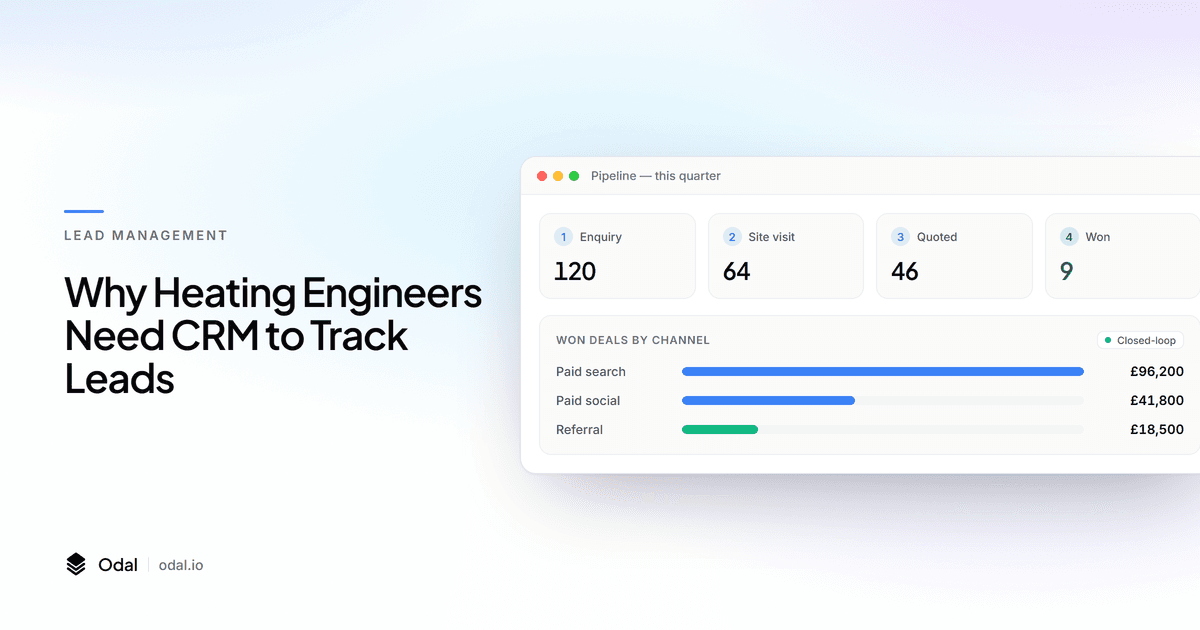
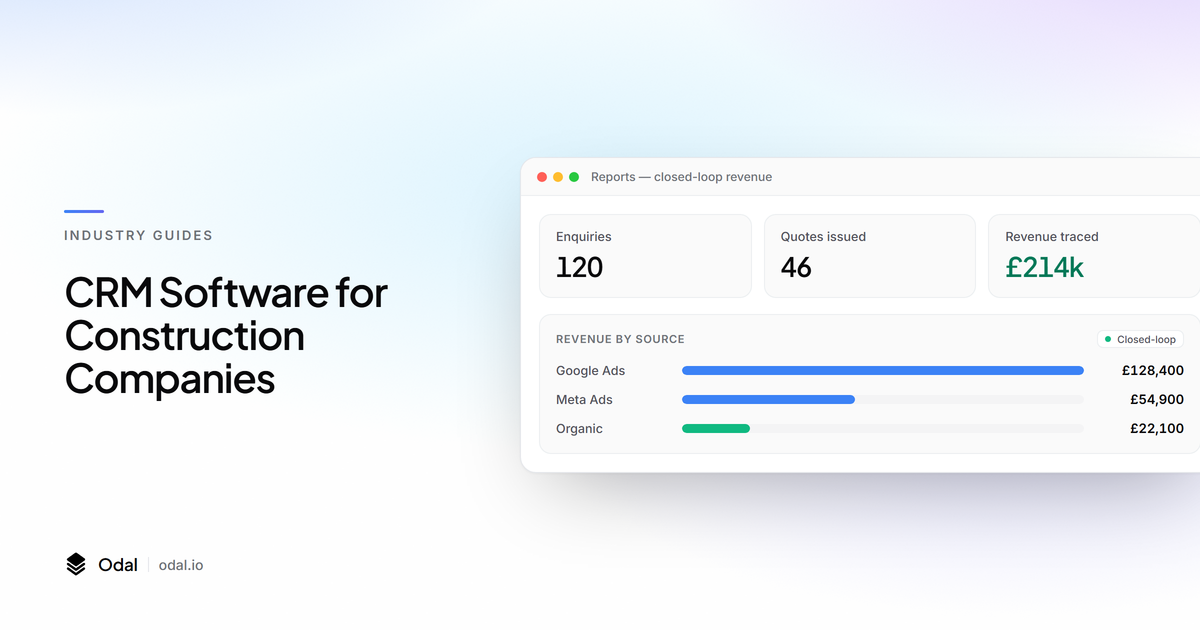
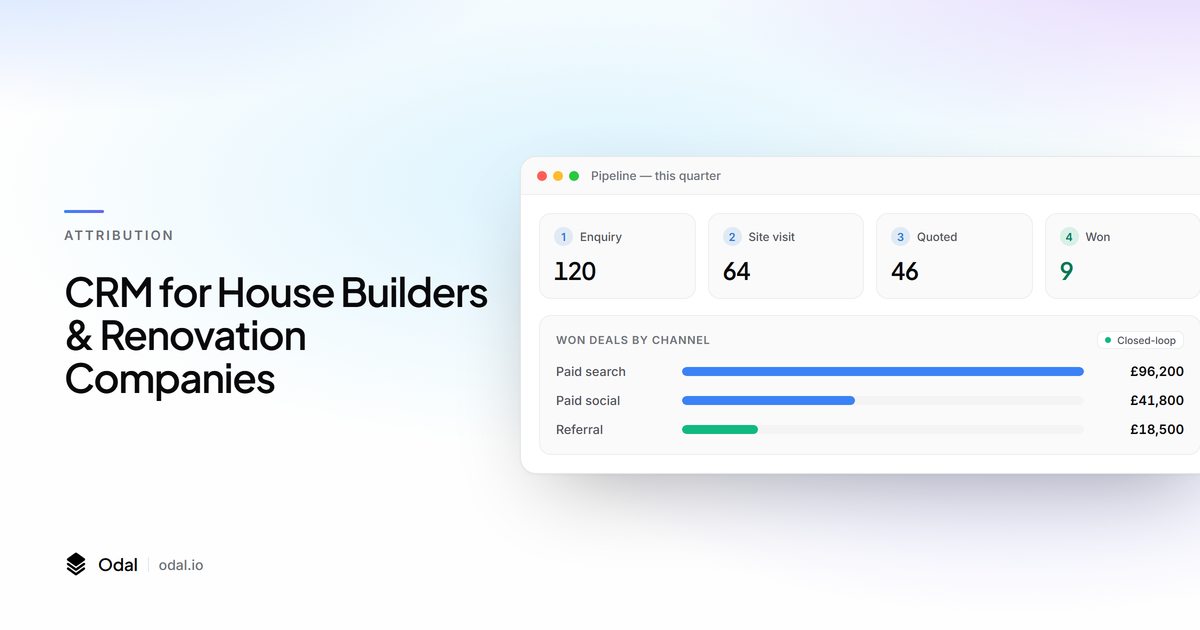
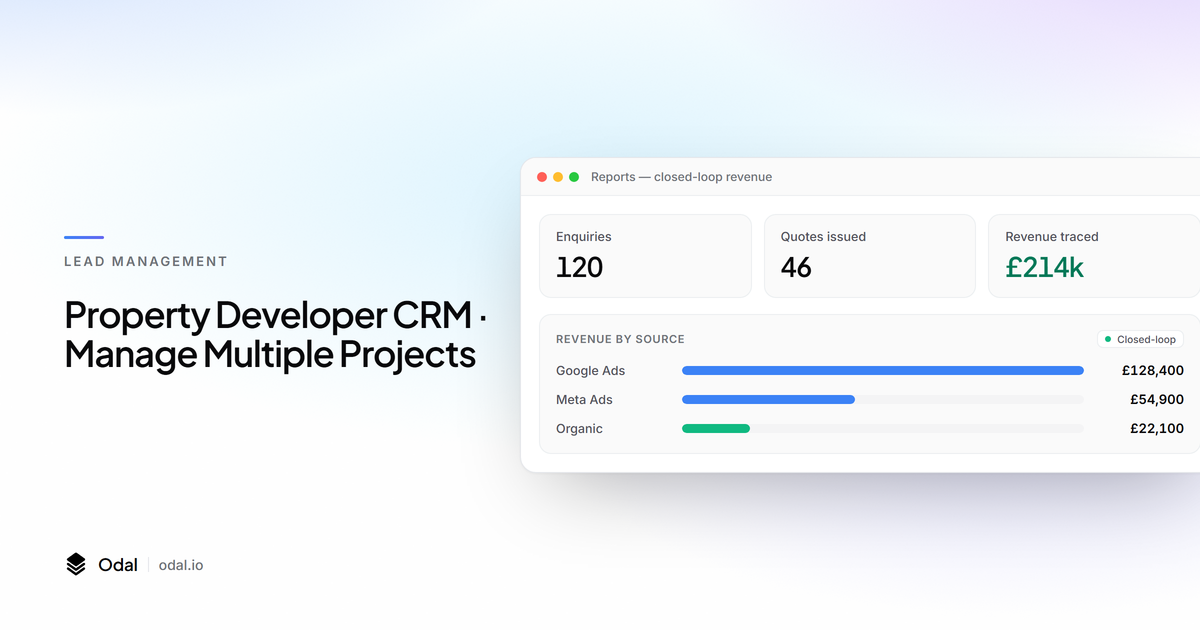
Most heating engineers have no reliable way of tracking which marketing activities generate profitable customers. You might know that Google Ads brings in enquiries, but do those enquiries convert to signed contracts. Do they become repeat customers for annual services.
This visibility gap costs money. Without clear attribution between marketing spend and actual revenue, you're making budget decisions based on guesswork rather than data. The enquiries that look promising might convert poorly, whilst the channels you're ignoring could be your most profitable sources of work.
Odal bridges this gap by connecting your marketing data directly to customer outcomes. When someone clicks your Google Ad, fills out your contact form, and eventually becomes a customer, Odal tracks that complete journey. You can see exactly which marketing channels produce customers who actually pay their invoices and book regular services.
This visibility transforms how you allocate your marketing budget. Instead of optimising for enquiries, you optimise for customers who generate long-term value. The difference in profitability is substantial.
If you're spending money on marketing but can't track which channels deliver actual revenue, you're flying blind. Start your free Odal trial and see exactly which marketing activities drive real business growth.
Frequently Asked Questions
How much time can a CRM system save heating engineers each week?
Most heating engineers report saving 3-5 hours per week on administrative tasks when they implement a comprehensive customer management system. This time comes from eliminating duplicate data entry, faster access to customer information, and streamlined processes for service follow-ups and invoice management.
What happens to existing customer records when switching to a new system?
Reputable CRM providers offer data migration services to transfer your existing customer information, job histories, and certificates to the new system. This process should be tested thoroughly before going live to ensure no critical business data is lost during the transition.
Do CRM systems work when mobile signal is poor?
Quality CRM systems designed for field workers include functionality that works with limited connectivity. You can access customer information, update job statuses, and complete certificates. The data synchronises when connectivity is available.
How do service tracking systems work for boiler maintenance?
The system tracks service due dates for each customer's appliances and provides visibility of which customers need contacting for upcoming maintenance. You can customise your follow-up approach, with most engineers planning contact 2-3 months before services are due. This systematic approach captures recurring revenue without manual tracking.
What should heating engineers look for in mobile CRM apps?
The mobile app should provide full functionality, not just basic information viewing. Essential features include complete customer records, job scheduling, certificate creation, and good mobile connectivity handling. The interface should be designed for use whilst wearing work gloves and in various lighting conditions.