Why Construction Businesses Need More Than Basic CRM
Generic CRM systems fail construction companies because they do not understand your sales cycle. A typical CRM assumes a lead converts within days or weeks. Your reality involves months between initial enquiry and project start, with multiple site visits, detailed quotes, planning permission delays, and seasonal demand fluctuations.
Your customer journey looks nothing like a SaaS sale or retail purchase. An extension project might begin with a web enquiry in January, involve three site visits through February and March, require planning permission approval by May, and finally convert to a signed contract in June for an August start date.
Standard CRM platforms cannot handle this complexity. They struggle with managing multiple developments, cannot track which marketing channel influenced a customer six months before they signed, and offer no visibility into project progression from quote to practical completion.
The Attribution Challenge in Construction Marketing
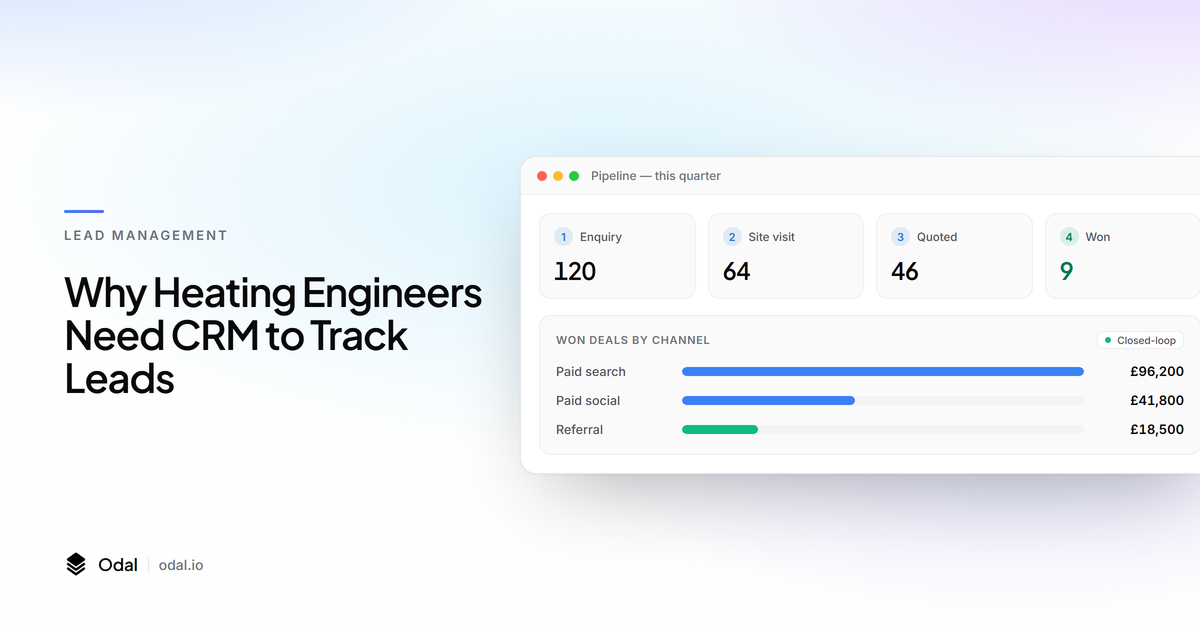
Most construction businesses operate with zero visibility into which marketing activities produce actual revenue. You might know that Google Ads generated 47 enquiries last month, but you cannot connect those enquiries to the contracts signed three months later.
This attribution gap creates several expensive problems. You continue spending on marketing channels that generate high enquiry volumes but low conversion rates. You under-invest in channels that produce fewer enquiries but higher-value projects. You cannot optimise your marketing spend because you lack the data to make informed decisions.
The phone-heavy nature of construction enquiries makes attribution even harder. A potential customer sees your Google Ad, visits your website, calls your office directly, and books a site visit. Without proper lead source tracking and CRM integration, that conversion appears to come from nowhere.
Seasonal patterns compound this challenge. Spring enquiries often convert to summer contracts, but without proper attribution, you cannot identify which marketing activities drove those conversions. You end up making budget allocation decisions based on enquiry volume rather than actual project value.
Managing Project Pipeline and Development Phases
Construction businesses need visibility across multiple project stages simultaneously. You have enquiries coming in, quotes being prepared, planning applications pending, contracts being negotiated, active builds in progress, and completed projects in defects periods.
Without proper pipeline management, you lose track of project status, miss follow-up opportunities, and struggle to balance capacity with incoming work. You cannot accurately forecast revenue because you lack visibility into conversion probability at each pipeline stage.
Managing multiple developments adds another layer of complexity. If you work on developments, you need to track individual opportunities, coordinate marketing for new releases, and manage customer reservations across multiple sites. This requires integration between your marketing data, sales process, and development planning.
The financial implications become significant. Poor pipeline visibility leads to capacity planning errors, missed revenue opportunities, and inefficient resource allocation. You might turn down profitable work because you cannot accurately assess your current project load, or accept too much work and struggle to deliver quality results.
Development and Marketing Coordination
Multi-site developers face additional challenges coordinating marketing efforts across different developments. Each site has its own launch timeline, release schedule, and target market. Your CRM needs to handle this complexity whilst maintaining visibility across all active developments.
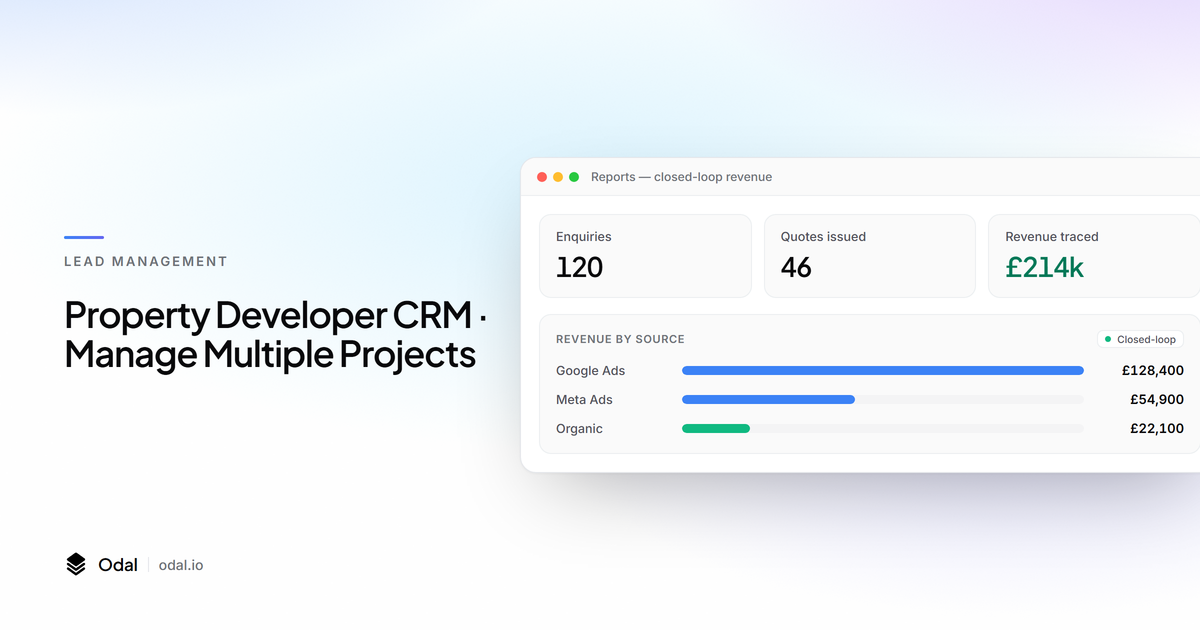
Marketing campaign effectiveness varies significantly between developments based on location, price point, and target demographic. Without proper attribution and project tracking, you cannot identify which marketing approaches work best for different development types. Property developers managing multiple projects require specialised CRM functionality that generic business systems simply cannot provide.
Managing the Extended Customer Lifecycle
Construction customer relationships extend far beyond project completion. You have warranty obligations, defects periods, potential repeat business, and referral opportunities. Most generic CRM systems focus on initial sale completion and ignore this extended relationship value.
Your aftercare service quality directly impacts future business generation. Satisfied customers become your best marketing channel through referrals and repeat projects. Poor defects management destroys your reputation and eliminates future opportunities from that customer network.
The retention period alone requires specialised tracking. You need visibility into outstanding defects, warranty expiry dates, and customer satisfaction levels across all completed projects. This information should integrate with your marketing attribution to identify which acquisition channels deliver the highest lifetime customer value.
Customer expectations around communication continue to evolve. Your CRM should support professional service standards whilst maintaining clear communication channels.
Regulatory Compliance and Documentation Management
Construction businesses operate under extensive regulatory requirements that generic CRM systems cannot accommodate. You need to track building regulations compliance, planning permission status, and warranty obligations.
Proper record keeping becomes critical for both operational efficiency and legal compliance. Every customer interaction, site visit, variation order, and completion certificate needs proper recording and easy retrieval. Poor record management creates liability risks and operational inefficiencies.
GDPR compliance adds complexity to marketing data management. You need systems that handle customer consent properly, manage data retention periods correctly, and support customer data requests efficiently. Construction-specific CRM systems understand these requirements and build compliance into their core functionality.
Choosing the Right CRM for Your Construction Business
Selecting a CRM system requires understanding your specific business model and operational requirements. A high-volume house builder needs different functionality than a specialist renovation company or commercial contractor.
Consider your project types, average project values, sales cycle length, and team structure. A system that works well for residential extensions might be completely inappropriate for large-scale developments or commercial projects.
Integration capabilities matter more than feature lists. Your CRM needs to connect with your existing marketing channels. Poor integration creates data silos and eliminates the visibility benefits you are trying to achieve.
Mobile accessibility becomes critical for construction businesses. Your sales team needs to access customer data during site visits, update project status from active builds, and capture new enquiries at marketing events. Desktop-only systems limit your team's effectiveness.
Measuring CRM ROI in Construction
CRM return on investment in construction comes from improved lead conversion rates, better marketing spend allocation, and increased customer lifetime value. However, measuring these benefits requires proper baseline data and consistent tracking.
Start by establishing current conversion rates from enquiry to quote, quote to contract, and contract to completion. Track average project values, sales cycle lengths, and customer acquisition costs. This baseline data allows you to measure improvement after CRM implementation.
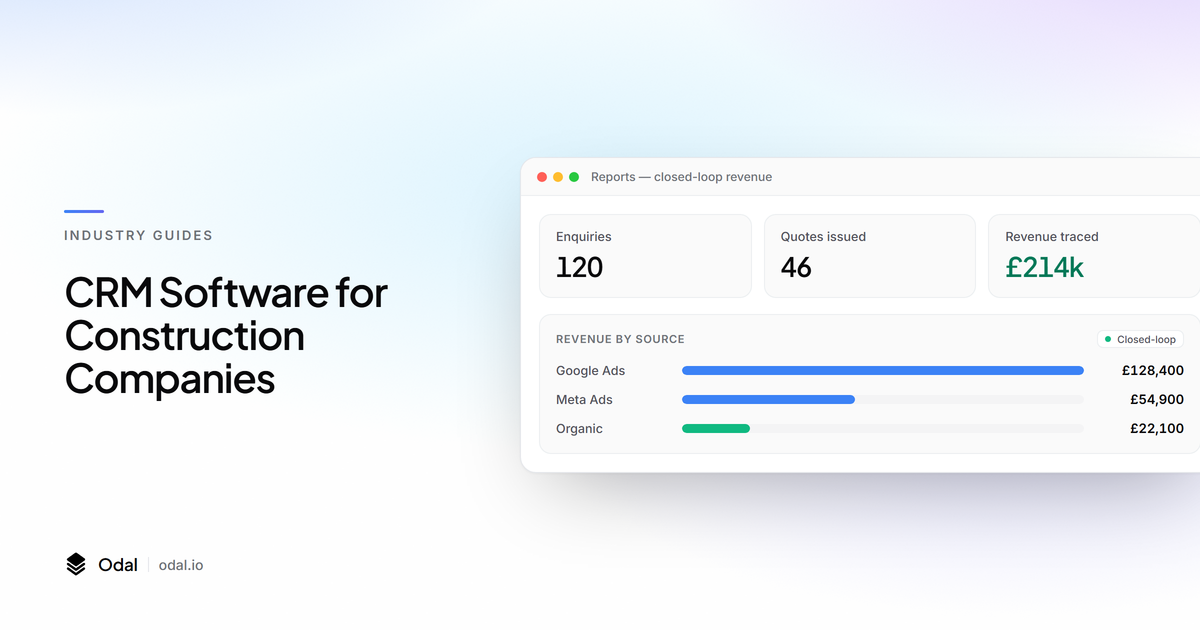
Marketing attribution provides the clearest ROI measurement. When you can connect marketing spend directly to signed contracts, you identify which channels deliver profitable returns and which waste money. This visibility typically pays for CRM costs within the first year.
Customer retention and referral rates offer longer-term ROI indicators. Improved customer service through better data management increases repeat business and referral generation. These benefits compound over time and often exceed initial acquisition improvements.
The construction industry generates significant value through proper CRM implementation, but success requires understanding your specific operational requirements and choosing systems designed for construction business models. According to the government's housebuilding market study, the industry faces ongoing challenges with efficiency and customer satisfaction that proper CRM systems can address. Generic solutions create more problems than they solve, whilst construction-specific platforms deliver measurable improvements in lead conversion, pipeline management, and customer satisfaction.
From what we see across the construction businesses we work with, the companies that properly connect their marketing spend to actual revenue consistently outperform those flying blind. The attribution clarity alone transforms budget allocation decisions and eliminates wasteful spending on channels that generate enquiries but never convert to paying customers. Industry statistics show that businesses with proper data management systems achieve higher conversion rates and customer satisfaction scores.
Ready to connect your marketing spend directly to signed contracts? Start your free Odal trial and see which marketing channels actually deliver revenue for your construction business.
Frequently Asked Questions
How long does it take to see ROI from a construction CRM system?
Most construction businesses see measurable improvements within 3-6 months of proper implementation. Marketing attribution benefits appear immediately once data integration is complete, whilst customer lifecycle improvements develop over 6-12 months as you build comprehensive customer histories.
Can construction CRM systems handle multiple development sites?
Yes, construction-specific CRM platforms are designed to manage multiple developments simultaneously. They provide site-specific marketing coordination and consolidated reporting across all active developments. This functionality is essential for any builder working on more than one project at a time.
What happens to existing customer data during CRM implementation?
Professional CRM implementation includes data migration from existing systems. Historical customer records, project information, and interaction histories transfer to the new platform. However, data quality improvement often requires manual cleanup during the migration process.
How do construction CRM systems handle planning permission tracking?
Construction-specific CRM systems include project status tracking that accommodates planning permission workflows. You can track application submission dates, expected decision timelines, and approval status. This information integrates with customer communications and project scheduling.
What training is required for construction CRM implementation?
Successful implementation requires comprehensive staff training on data entry procedures, workflow management, and reporting capabilities. Most providers offer training programmes, but internal process discipline matters more than software complexity. Plan for 2-4 weeks of intensive training and 2-3 months for full adoption.