Why Standard CRM Systems Miss the Mark for Driveway Installers
Most CRM systems are built for businesses with short sales cycles and predictable conversion patterns. They assume leads come in, get qualified quickly, and either convert or get discarded within days or weeks. Driveway installation doesn't work like that.
Your sales cycle stretches across months. A homeowner might enquire in March, get quotes from three contractors, wait until their planning permission comes through in June, then finally sign a contract in August. During that time, they've probably forgotten how they originally found you unless you've stayed in touch systematically.
The real challenge is attribution across extended timelines. When someone calls to book their driveway installation, can you trace that back to the Google Ad they clicked three months ago? Most installers can't, which means they're making budget allocation decisions based on incomplete information.
Standard CRM systems also struggle with the project-based nature of driveway work. They're designed around recurring customers and subscription models, not one-off projects worth £5,000 to £15,000 where the customer relationship might span years between enquiry and potential future work.
The Hidden Cost of Poor Lead Tracking
When you can't connect marketing spend to actual revenue, you make expensive mistakes. From what we see across the driveway installers we work with, they continue spending on lead generation sources that feel busy but don't convert, whilst neglecting channels that quietly deliver high-value work.
Consider the typical scenario: your Google Ads generate 20 enquiries per month at £50 per lead. Your Facebook advertising brings in 15 enquiries at £35 each. Without proper tracking, you might assume Facebook is more cost-effective because the cost per lead is lower. But if Google leads convert at 25% and Facebook leads convert at 10%, your actual cost per signed contract tells a different story entirely.
The problem compounds during busy periods. When you're juggling site visits, quotes, and active projects, lead follow-up becomes inconsistent. High-value prospects slip through the cracks because there's no systematic process for staying in touch across the extended decision timeline.
What Driveway Installers Actually Need from CRM
Effective CRM for driveway installers needs to handle the specific realities of your business model. That means tracking leads across months, not days. It means connecting phone enquiries back to their original marketing source, even when the customer can't remember where they found you.
Attribution across multiple touchpoints is crucial. A typical customer journey might involve seeing your van, visiting your website, calling for information, requesting a quote, getting additional quotes from competitors, then finally deciding months later. Your CRM needs to capture and connect these interactions to give you accurate conversion data.
Project value tracking becomes essential when individual contracts can represent weeks of revenue. You need visibility into your pipeline not just by number of leads, but by total project value at each stage. This helps with cash flow planning and resource allocation.
The system also needs to handle the seasonal patterns common in driveway work. Spring enquiries often convert in summer. Autumn quotes might not proceed until the following year. Your CRM should track these patterns and help you forecast revenue across seasonal cycles.
Lead Source Attribution That Actually Works
The most critical feature for driveway installers is reliable lead source tracking. When someone calls your business number, you need to know immediately whether they came from Google Ads, Facebook, a referral, or saw your signage. This information needs to stay connected to that lead throughout the entire sales process.
Modern attribution systems can track this automatically. When someone clicks your Google Ad and then calls three days later, the system connects that phone call back to the specific ad and keyword that generated it. When they eventually sign a contract months later, you can see the complete journey from first click to final revenue.
Pipeline Management for Extended Sales Cycles
Your pipeline needs to reflect the reality of driveway installation sales. Leads don't move linearly from enquiry to quote to contract. They might request quotes from multiple contractors, pause their project for planning permission, or delay until the following season.
Effective pipeline management tracks deals across these extended timelines whilst maintaining visibility into total project value at each stage. You need to see not just how many leads you have, but the total value of work in your pipeline and realistic conversion probabilities based on historical data.
Connecting Marketing Spend to Actual Revenue
The gap between marketing activity and revenue recognition is where most driveway installers lose money. You might spend £1,000 on Google Ads in January, generate several enquiries, and not see the revenue from those leads until April or May. Without proper tracking, it's impossible to calculate true return on ad spend.
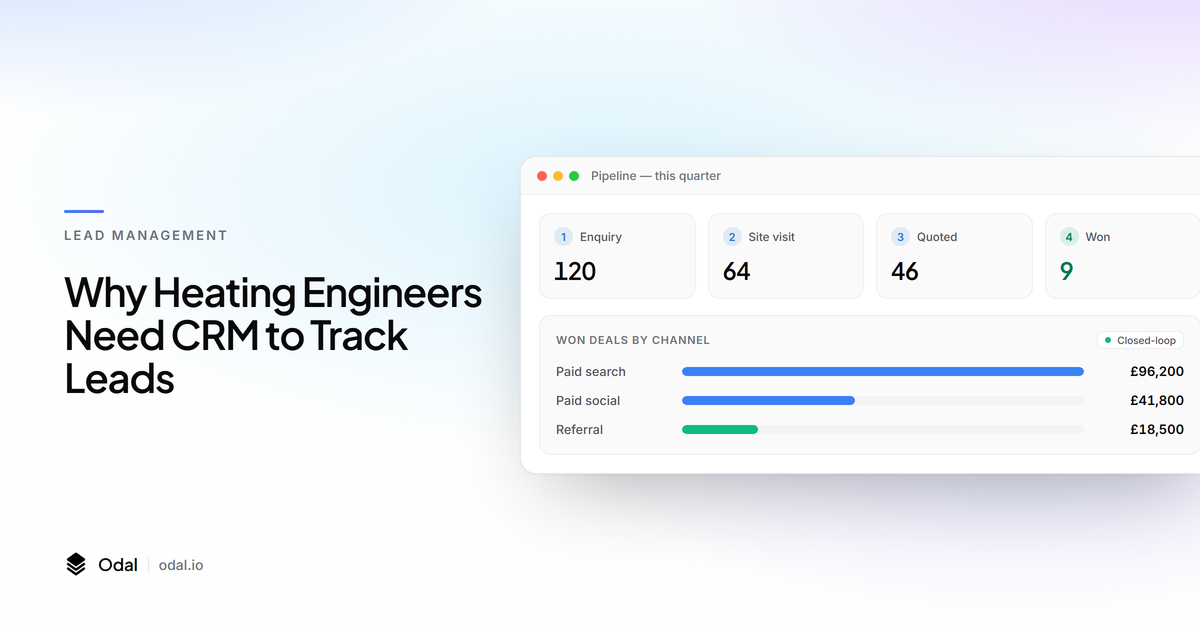
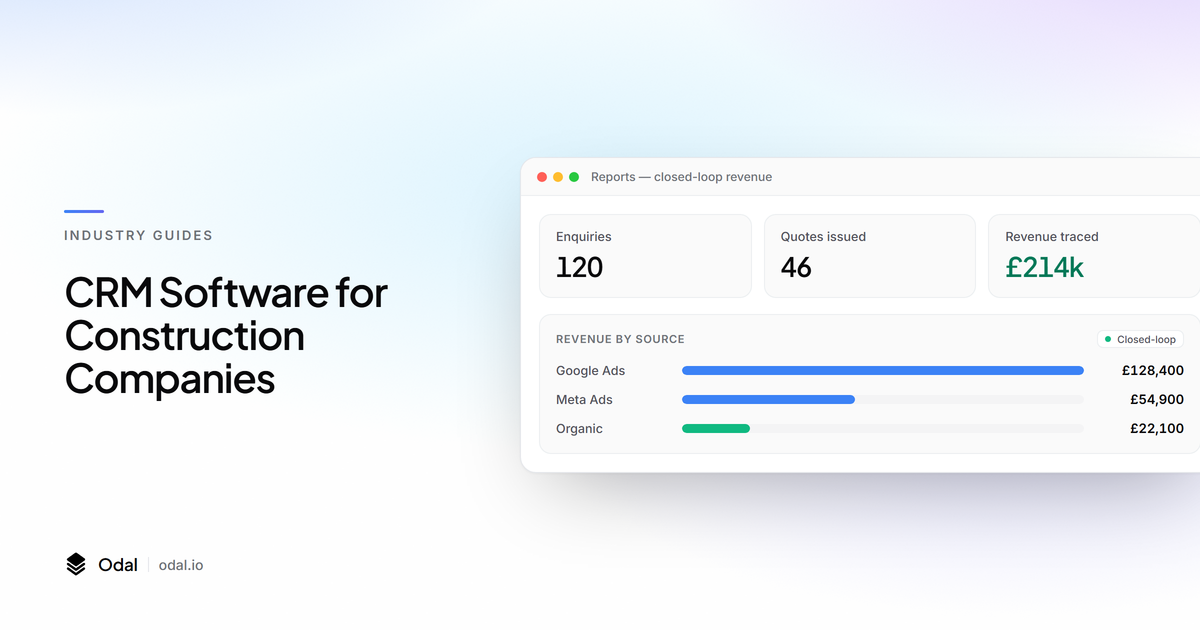
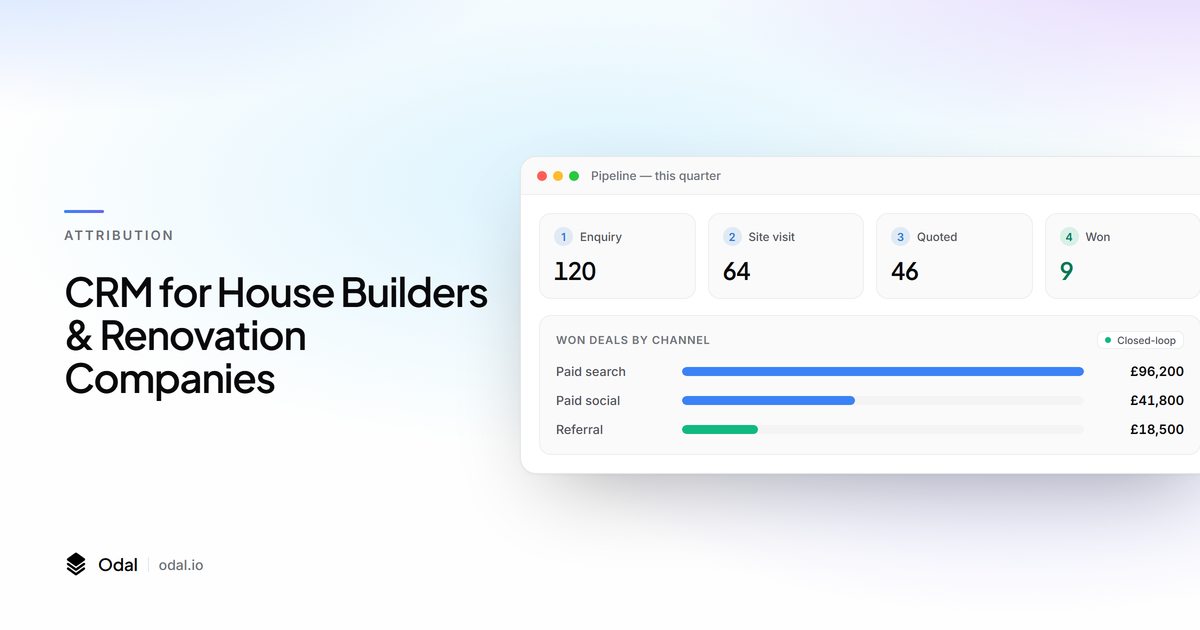
Closed-loop reporting solves this problem by connecting every pound of marketing spend to actual signed contracts and revenue. When implemented correctly, you can see exactly which keywords, ads, and campaigns are generating profitable work versus which ones are attracting enquiries that never convert.
This visibility transforms budget allocation decisions. Instead of guessing which marketing channels work best, you have concrete data showing cost per acquisition, average project value by source, and true return on investment across different lead generation methods.
Seasonal Pattern Recognition
Driveway installation follows predictable seasonal patterns, but most installers don't track these systematically. Spring typically brings the highest enquiry volume as homeowners plan summer projects. Autumn enquiries often have longer decision timelines as customers plan for the following year.
Understanding these patterns helps optimise marketing spend timing. Rather than maintaining consistent ad spend year-round, you can increase budget during high-conversion periods and reduce spend when enquiries are less likely to convert quickly.
Historical data also reveals customer behaviour patterns. Some lead sources might generate immediate enquiries but longer decision timelines. Others might produce fewer leads but higher conversion rates. This intelligence helps set realistic expectations and follow-up schedules.
Implementation Without Disrupting Operations
The biggest barrier to CRM adoption for driveway installers is the perception that implementation will disrupt daily operations. You're already managing site visits, preparing quotes, and coordinating projects. Adding new systems feels like additional administrative burden.
Successful implementation starts with lead capture automation rather than trying to change existing processes immediately. Begin by ensuring every enquiry gets captured with its source attribution, then gradually add pipeline tracking and follow-up systems.
The key is connecting existing touchpoints rather than creating new ones. Your phone system, website forms, and enquiries can feed automatically into the CRM built around attribution without requiring manual data entry. This gives you attribution data without changing how you currently handle enquiries.
Mobile access becomes crucial for field-based operations. You need to update deal stages, add notes, and schedule follow-ups whilst on-site with customers. The system should work seamlessly whether you're in the office or measuring up a driveway.
Training and Adoption Strategies
CRM adoption fails when the system feels more complicated than existing processes. Start with basic lead tracking and pipeline visibility before adding advanced features. Team members need to see immediate value from the system, not additional administrative work.
Focus training on the features that directly impact revenue. Show how lead source tracking reveals which marketing channels deliver profitable work. Demonstrate how pipeline visibility helps with project scheduling and cash flow planning. Make the commercial benefits clear and immediate.
Regular review sessions help maintain momentum. Weekly pipeline reviews become more valuable when you can see total project value, conversion probabilities, and historical performance data. The CRM transforms these meetings from guesswork into data-driven planning sessions.
If you're ready to connect your marketing spend to actual revenue and stop guessing which lead sources deliver profitable work, start your free Odal trial. See exactly which campaigns are bringing in the contracts that matter, not just the enquiries that keep you busy.
Frequently Asked Questions
How long does it take to see ROI from a CRM system for driveway installation?
Most driveway installers see improved lead conversion within 4-6 weeks of implementation, but full ROI typically becomes clear after 3-4 months when you have enough data to identify which marketing channels deliver the highest-value contracts. The extended sales cycles in driveway work mean you need time to track leads from initial enquiry through to signed contracts.
Can CRM systems track phone enquiries back to specific Google Ads campaigns?
Yes, modern CRM systems with proper call tracking can connect phone enquiries directly to the specific Google Ads campaign, ad group, and even keyword that generated the call. This works by using dynamic phone numbers or call tracking pixels that maintain the connection between the original click and the subsequent phone call.
What happens to leads that don't convert immediately but might be interested later?
Effective CRM systems maintain these leads with systematic follow-up at appropriate intervals. For driveway installation, this might mean checking back every 3-6 months, as customers often delay projects due to planning permission, seasonal timing, or budget considerations. The system ensures no potential future work gets forgotten.
How do you handle leads from referrals and word-of-mouth in a CRM system?
Referral leads should be tagged with the source customer's information and tracked separately from paid advertising leads. This helps you identify your best referral sources and potentially develop referral incentive programmes. Many CRM systems allow you to create custom lead sources for different types of referrals.
Is it worth implementing CRM for smaller driveway installation businesses?
Even small driveway installers benefit from basic lead tracking and source attribution, especially if you're spending money on advertising. When individual contracts are worth £5,000-£15,000, losing just one high-value lead due to poor follow-up can cost more than a year of CRM subscription fees. The key is starting simple and scaling up as the business grows.
How do you measure the true cost per acquisition for driveway installation leads?
True cost per acquisition requires tracking from initial marketing spend through to signed contracts, not just enquiries. This means dividing your total marketing spend by the number of actual jobs won, not leads generated. For example, if you spend £1,000 on Google Ads and win 4 contracts from those leads, your cost per acquisition is £250, regardless of how many enquiries were generated.