Why Extension Builders Need Different CRM Thinking
Generic business CRM systems miss the mark completely when it comes to construction. They're built for sales teams closing deals in weeks, not builders managing projects that stretch across months with multiple approval stages, site visits, and stakeholder communications.
Your typical extension project involves an initial enquiry, site assessment, detailed quotation, planning discussions, contract negotiation, build phase coordination, and final handover. Each stage generates documents, requires follow-ups, and involves different people. A standard CRM treats this as one "opportunity" when it's actually a complex project lifecycle.
The seasonal nature of construction enquiries adds another layer of complexity. You might receive 40 enquiries in March and 12 in November. A CRM built around attribution needs to handle these fluctuations whilst maintaining visibility over your pipeline throughout the year.
Most importantly, extension building is relationship-heavy. Clients are inviting you into their homes, trusting you with significant investments, and expecting regular updates on progress. The CRM needs to support this level of personal service whilst keeping your business organised and profitable.
Lead Management That Actually Works for Builders
The biggest waste in most extension building businesses happens right at the beginning. An enquiry comes in through your website, someone calls about a loft conversion, or a neighbour asks for a quote. Without proper systems, these enquiries get lost in email threads or forgotten entirely.
Effective lead capture means every enquiry gets logged immediately, regardless of how it arrives. Website forms, phone calls, referrals from previous clients, and recommendations from architects all need to feed into the same system. You should be able to see at a glance which marketing efforts are generating the most valuable enquiries.
The follow-up process separates professional builders from the rest. Research shows that responding to enquiries within an hour dramatically improves conversion rates, but most builders take days to get back to potential clients. Systematic follow-up processes can acknowledge enquiries immediately whilst you prepare detailed responses.
Lead scoring becomes crucial when you're dealing with varying project values. A £15,000 garden room enquiry requires different handling than a £80,000 two-storey extension. Your CRM should help prioritise enquiries based on project value, timeline, and likelihood to proceed.
Project Lifecycle Visibility
Extension building involves multiple overlapping phases that generic CRM systems cannot handle effectively. From initial site survey through to defects period completion, you need visibility over every stage without drowning in administrative overhead.
The planning and approval phase alone can stretch for months. Building regulations applications, party wall agreements, structural calculations, and client approvals all need tracking with systematic reminders for follow-ups. Missing a planning deadline or failing to chase client approvals can derail entire project timelines.
Organised information management becomes critical as projects progress. The CRM should provide clear organisation ensuring everyone works from current information.
Progress tracking during the build phase requires different functionality than simple task management. You need to record milestone completions, coordinate schedules, and communicate updates to clients. Mobile access is essential since most updates happen on-site rather than in the office.
The handover and retention period often gets neglected, but it's crucial for client satisfaction and future referrals. Systematic tracking of snagging items, warranty periods, and follow-up maintenance creates opportunities for additional work whilst maintaining professional standards.
Communication Centralisation
Extension projects generate enormous volumes of communication across multiple channels. Clients email questions, architects send revised drawings, building control officers request additional information, and subcontractors confirm availability. Without centralisation, critical information gets buried in email threads or lost entirely.
The CRM should capture all communications in one place, regardless of whether they arrive by email or phone. When a client calls asking about progress, you should be able to see the complete conversation history immediately rather than searching through multiple email accounts.
Systematic communication processes help maintain professional standards without constant manual effort. New enquiries receive immediate acknowledgement, clients get regular project updates, and follow-up processes ensure no opportunities get forgotten. The key is organisation that feels personal rather than robotic.
Clear communication channels provide transparency that sets professional builders apart from competitors. Clients appreciate organised information access and structured query processes rather than calling at inconvenient times or sending scattered emails.
Subcontractor coordination improves dramatically when everyone works from the same information. Sharing relevant project details, schedules, and specifications through the CRM ensures subcontractors arrive prepared and work to current requirements.
Mobile Functionality for Site Work
Extension builders spend most of their time on-site rather than in offices. The CRM must function effectively on mobile devices, allowing real-time updates without requiring evening administrative sessions to catch up on paperwork.
Site visit reports can be completed immediately using mobile devices, including measurements and client conversations. This information feeds directly into quotation preparation and project planning rather than relying on handwritten notes that might get lost or forgotten.
Progress updates become routine when they can be recorded quickly on-site. Completing foundation work, reaching first-floor level, or installing roof structures can trigger client notifications and schedule updates for subsequent trades.
Reliable functionality ensures continuity when mobile signals are poor or non-existent on construction sites. The CRM should sync automatically when connectivity returns, preventing data loss or duplicate entries.
Most extension builders already use various software tools for estimating and project management. The CRM should integrate seamlessly with existing systems rather than requiring complete workflow changes or duplicate data entry.
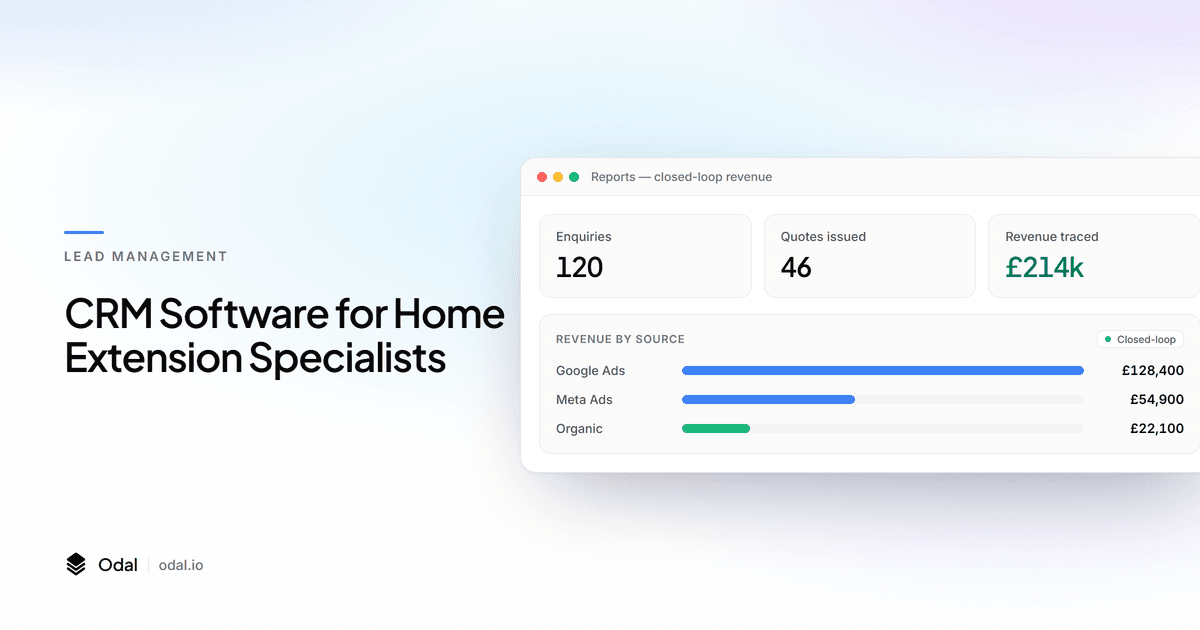
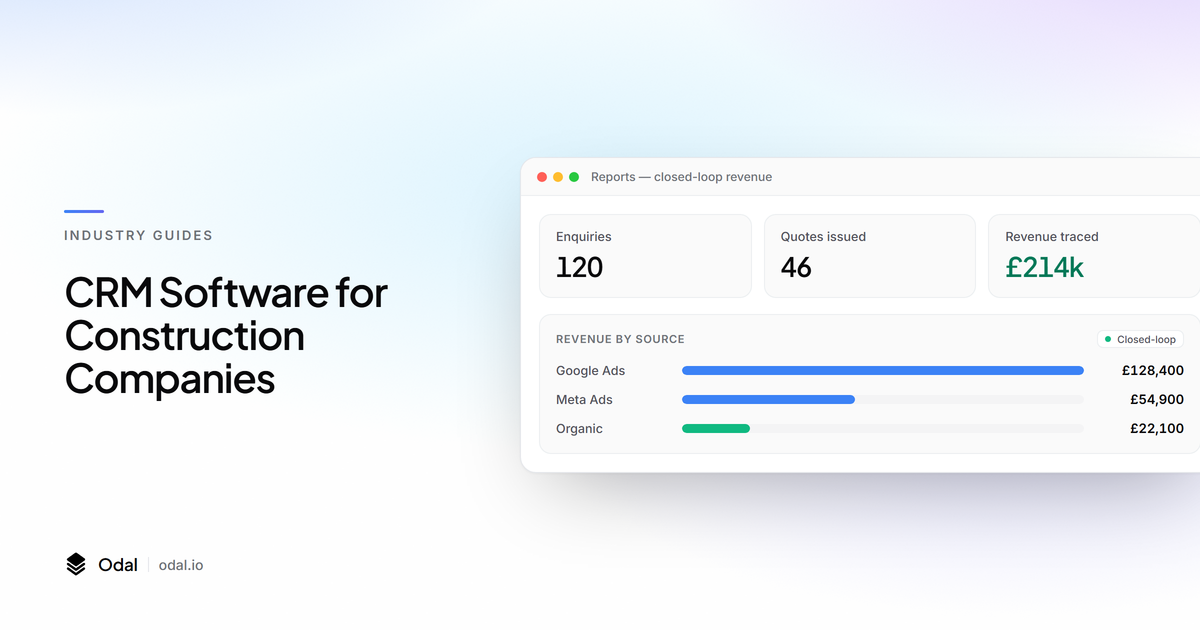
Marketing integration allows enquiry sources and campaign performance to flow directly into lead tracking and conversion analysis. When advertising campaigns generate enquiries, the CRM should capture source attribution automatically across all relevant communications and project tracking.
Form integration captures website enquiries automatically rather than requiring manual copying or forwarding. When clients submit enquiries through your website, the information should appear in the CRM immediately alongside source tracking and campaign attribution.
Measuring Success and ROI
CRM implementation success for extension builders should be measured against specific construction industry metrics rather than generic business indicators. Lead conversion rates, project completion times, client satisfaction scores, and repeat business percentages provide meaningful insights into system effectiveness.
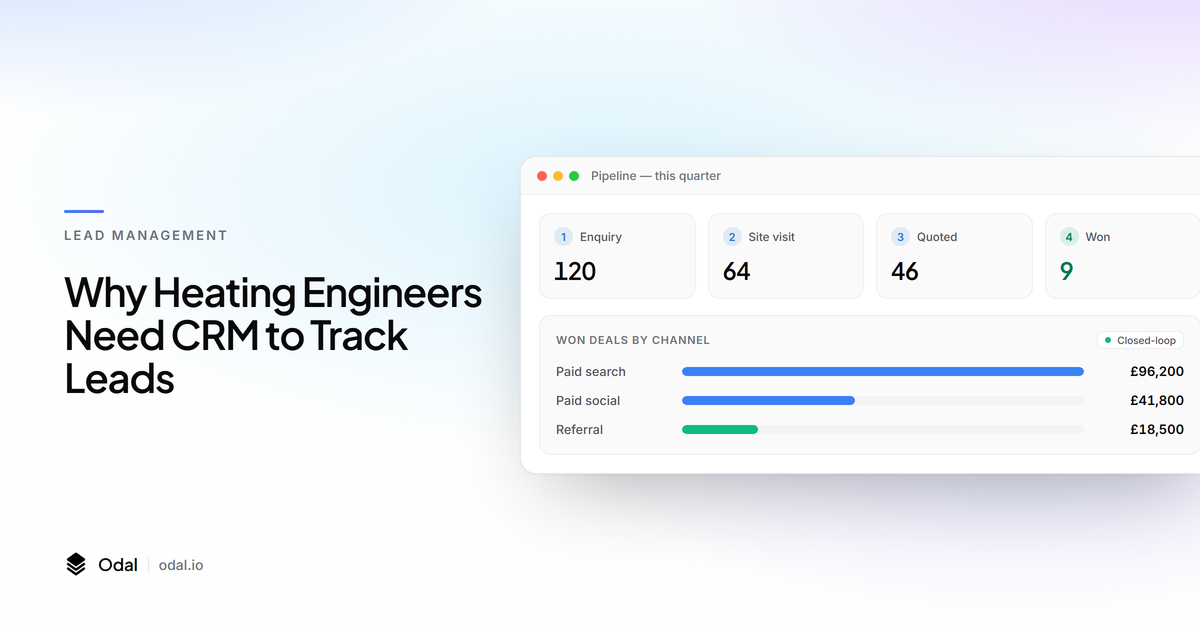
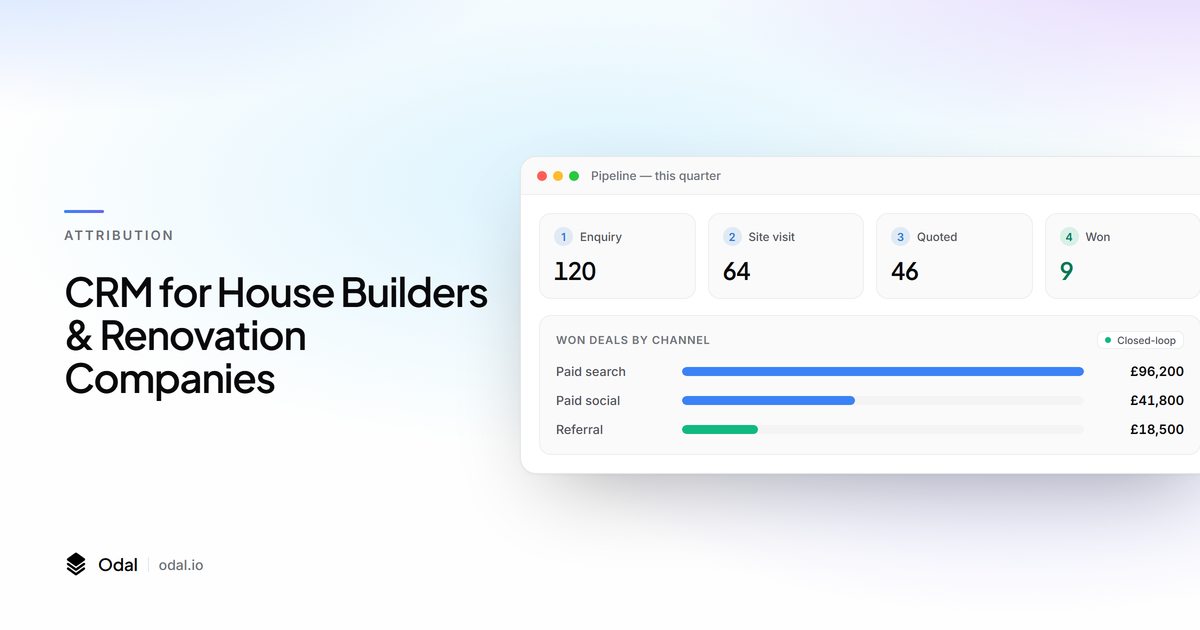
Lead conversion tracking reveals which marketing channels generate the most valuable enquiries. Understanding that website enquiries convert at different rates than referrals helps allocate marketing budget more effectively and focus effort on relationship-building activities.
Project profitability analysis becomes possible when all costs, timelines, and variations are tracked systematically. Identifying which project types, client segments, or geographical areas generate the highest margins informs future business development decisions.
Client satisfaction measurement through systematic feedback collection identifies improvement opportunities and generates testimonials for future marketing. Tracking satisfaction scores across different project phases highlights where communication or service delivery needs attention.
Cash flow improvement often represents the most immediate ROI from CRM implementation. Better project scheduling contributes to more predictable revenue flows.
The time savings from reduced administrative overhead allow more focus on business development, site supervision, and client relationship building. Many builders report reclaiming 5-8 hours per week previously spent on manual data entry and information searching.
Ready to stop losing enquiries and start running your extension building business like the professional operation it deserves to be? Start your free trial and see how proper CRM systems transform construction businesses from chaotic to systematic.
Frequently Asked Questions
How long does it take to set up a CRM system for an extension building business?
Initial setup typically takes 2-3 weeks, including data migration from existing systems, team training, and workflow configuration. However, you can start capturing new enquiries immediately whilst historical data is being organised. The key is beginning with lead capture rather than trying to perfect everything before starting.
Will my team actually use a CRM system or will it just create more work?
Adoption depends heavily on choosing a system designed for construction workflows rather than generic business CRM. When the CRM makes daily tasks easier rather than adding administrative burden, teams embrace it quickly. Mobile functionality and intuitive interfaces are crucial for field-based teams.
Can I track which marketing channels generate the most valuable extension projects?
Yes, proper CRM systems track enquiry sources and connect them to final project values and profitability. You'll see whether website enquiries, referrals, local advertising, or social media generate the highest-value projects, allowing you to focus marketing budget on the most effective channels.
How does CRM help with the long sales cycles typical in extension building?
CRM systems excel at managing extended sales cycles through systematic follow-up processes, milestone tracking, and organised communication. You can nurture prospects over months without manual effort, ensuring you stay visible when they're ready to proceed with their project.
What happens to my existing client data and project information?
Most CRM platforms provide data migration services to transfer existing client information, project histories, and documents from spreadsheets, email systems, and other software. The migration process is typically handled by the CRM provider to ensure data integrity and completeness.
Do I need technical expertise to manage a CRM system effectively?
Modern construction CRM systems are designed for ease of use rather than technical complexity. Basic computer skills and familiarity with smartphones are sufficient for most users. Comprehensive training and support resources help teams become proficient quickly without requiring technical backgrounds.