Why Kitchen Fitters Need Different CRM Thinking
Kitchen fitting isn't like selling software subscriptions or booking restaurant tables. Your sales cycle runs from initial enquiry through to practical completion, often spanning three to six months. A customer might enquire in January, sign the contract in March, and have their kitchen completed in May.
Most generic CRM systems treat every lead the same way. But in kitchen fitting, an enquiry for a £15,000 full kitchen replacement in a four-bedroom house is fundamentally different from someone asking for a quote to replace three cabinet doors. Your CRM needs to capture project value, property type, timeline expectations, and whether planning permission is involved.
The real challenge is attribution. When Mrs Johnson calls you six months after visiting your website because her neighbour recommended you, which marketing channel gets the credit? When someone finds you through Google, visits your showroom, gets a quote, then signs three months later after seeing your van at another job, how do you track that conversion path?
From what we see across the kitchen fitting businesses we work with, this attribution blindness is costing serious money. You're making budget decisions based on gut feel rather than actual revenue data.
Essential Features for Kitchen Fitting CRM
Your CRM needs to handle the specific realities of kitchen fitting, not just store contact details and manage basic pipelines.
Project value tracking is non-negotiable. Every enquiry should capture estimated project value, actual quoted amount, and final contract value. This lets you identify which marketing channels bring in high-value projects versus small jobs that barely cover your costs.
Lead source attribution becomes critical when your sales cycle is measured in months, not days. The system needs to track not just the first touchpoint, but the entire journey. Someone might find you through a Google search, visit your showroom, get referred by a friend, then finally convert after seeing your work at another property.
Pipeline management and follow-up tracking matter because kitchen quotes are complex documents involving multiple suppliers, delivery schedules, and coordination with other trades. Your CRM should track quote status, follow-up dates, and reasons for lost opportunities.
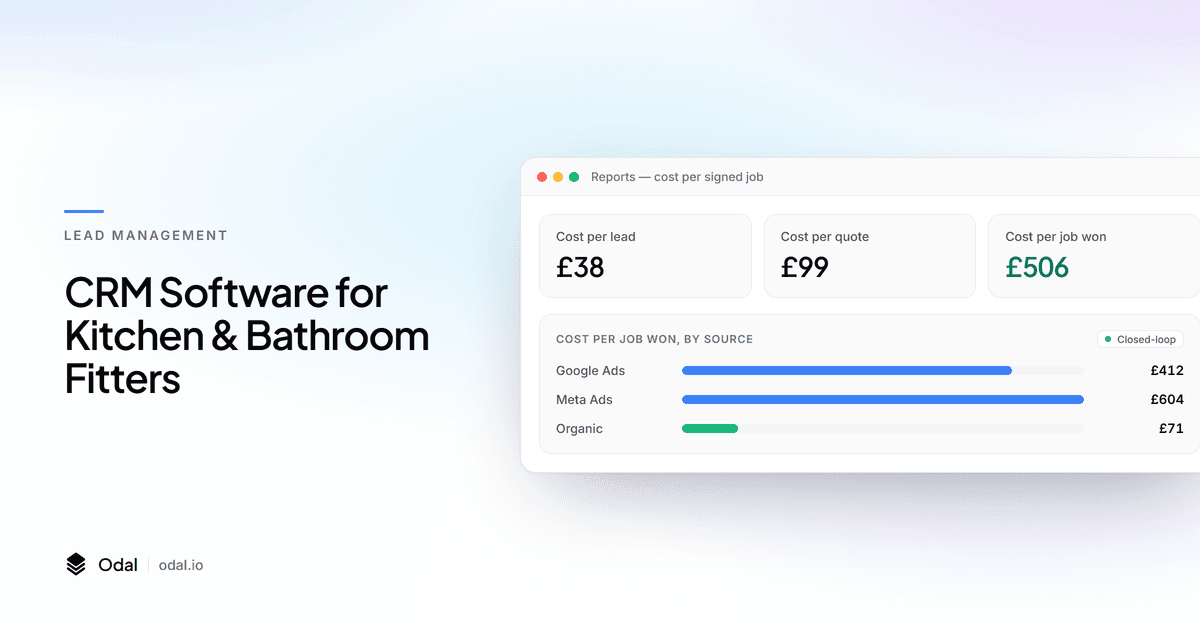
The businesses we work with that get this right can tell you exactly which £500 Google Ads spend generated that £35,000 kitchen project six months later. The ones still using spreadsheets are flying blind.
Free vs Paid CRM Options
Free CRM systems work for very small operations, but they hit limitations quickly. Most free options restrict you to basic contact storage and simple pipeline tracking. When you're managing multiple projects simultaneously, each requiring detailed specifications, supplier coordination, and progress tracking, free systems become inadequate.
The real limitation isn't storage or user numbers. It's the lack of customisation for your specific workflow. Kitchen fitting requires tracking planning permission status, structural survey requirements, delivery schedules, and coordination with plumbers and electricians. Generic free CRMs can't handle this complexity.
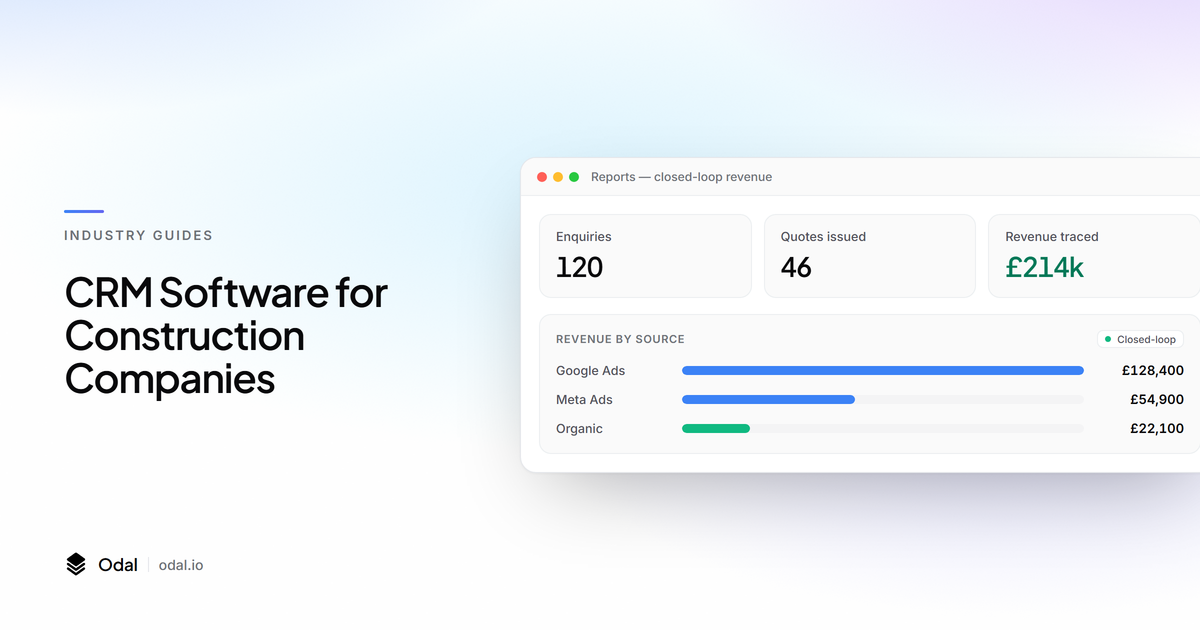
Paid systems justify their cost through better attribution tracking and automation. When you can see that your £2,000 monthly Google Ads spend generated £45,000 in signed contracts last quarter, the CRM subscription cost becomes irrelevant.
The maths is straightforward. If proper attribution helps you shift just 10% of your marketing budget from channels that generate enquiries to channels that generate contracts, you'll likely cover the CRM cost several times over.
UK-Specific Considerations
Operating in the UK market means dealing with specific regulations and business practices that generic CRM systems often ignore.
GDPR compliance isn't optional. Your CRM needs proper data protection features, not just a checkbox claiming compliance. This includes data retention policies, customer consent management, and the ability to completely delete customer records when requested.
VAT handling and UK-specific business requirements need to be built into the system, not added as an afterthought. Many international CRM platforms struggle with UK tax requirements and business registration systems.
Implementation Reality Check
The biggest CRM implementation failures happen because businesses focus on features rather than workflow. Before choosing any system, map out your actual customer journey from initial enquiry to final payment.
Data migration is where most implementations stumble. If you've got years of customer data in spreadsheets, emails, and paper files, cleaning and organising this information before migration is essential. Garbage in, garbage out applies particularly strongly to CRM systems.
Training your team properly means more than a one-hour demo. Kitchen fitting involves multiple people interacting with each customer, the person who takes the initial enquiry, the estimator who visits the property, the project manager who coordinates installation, and the fitter who completes the work. Everyone needs to understand how to use the system consistently.
The businesses that get CRM implementation right treat it like installing a new kitchen. You plan properly, prepare thoroughly, and accept that there will be some disruption during the changeover period.
Measuring CRM Success
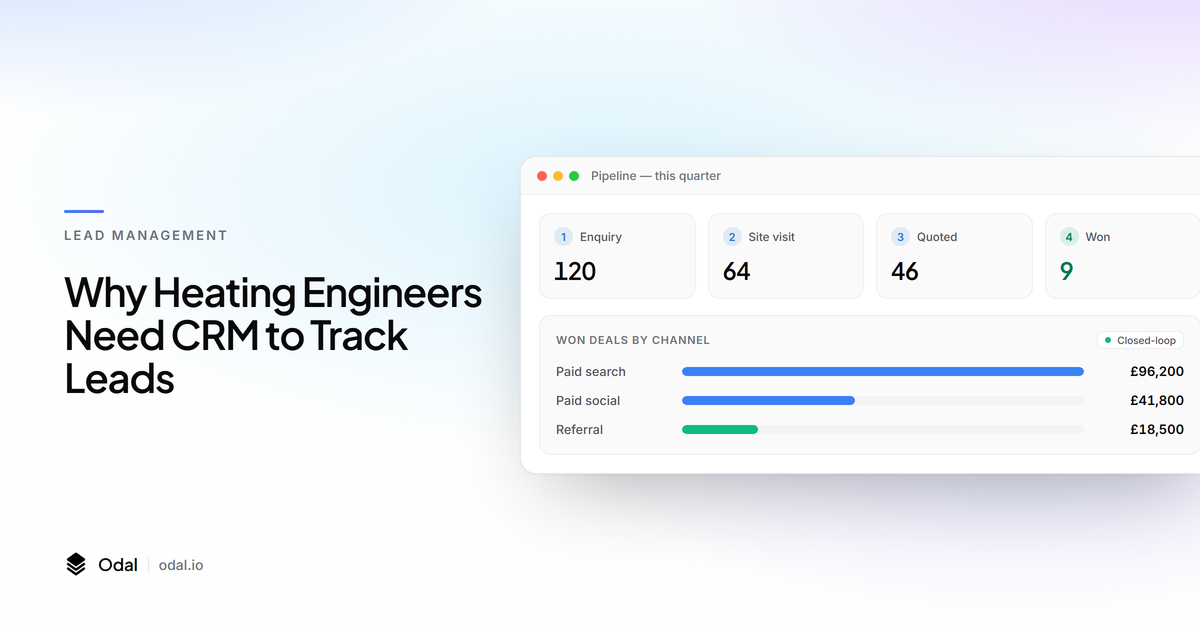
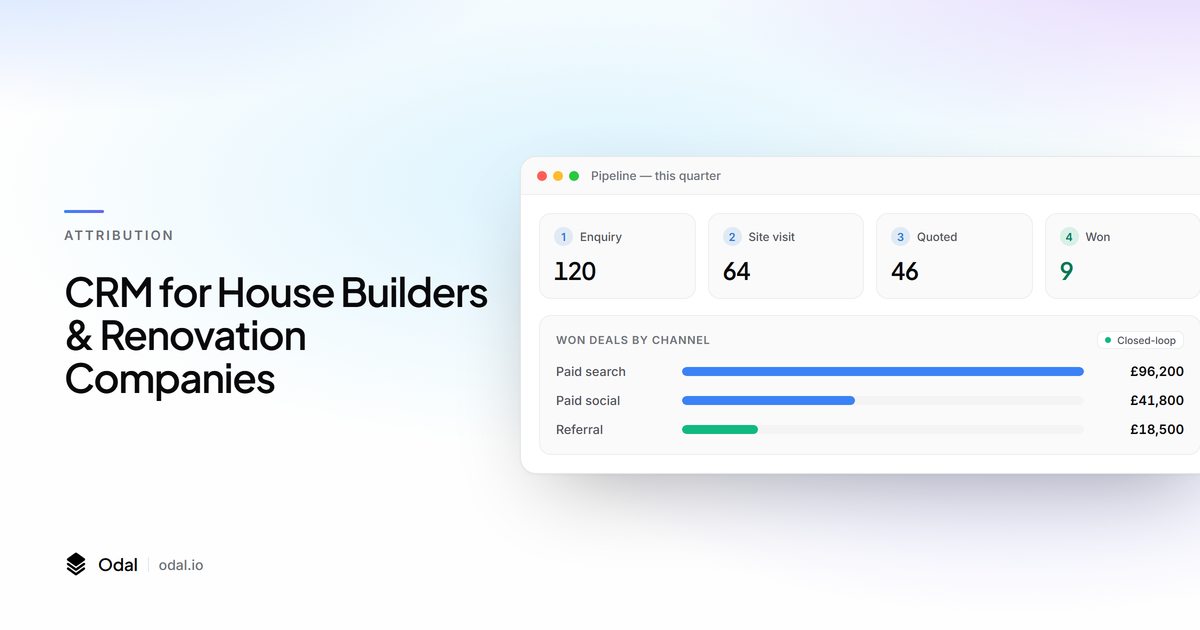
The real test of any CRM system is whether it improves your conversion rates and project profitability. Track lead-to-quote conversion rates before and after implementation. Monitor quote-to-contract conversion rates across different lead sources.
Project completion times should improve with better coordination and communication. If your average project timeline doesn't decrease after CRM implementation, something isn't working properly.
Customer satisfaction scores matter, but they're a lagging indicator. Leading indicators include response time to initial enquiries, accuracy of project timelines, and reduction in customer complaints during installation.
From our experience, the businesses that see the biggest improvement focus on revenue per lead rather than total lead volume. Better attribution helps you generate fewer, higher-quality enquiries rather than chasing vanity metrics.
Future-Proofing Your Choice
The kitchen fitting industry is evolving rapidly. Your CRM needs to adapt to changing customer expectations and new business requirements.
Mobile functionality isn't optional anymore. Your team needs to access customer information, update project status, and capture information from job sites. If your CRM doesn't work properly on mobile devices, it will become a bottleneck rather than an asset.
Integration capabilities matter more than individual features. Your CRM will need to connect with accounting systems, supplier platforms, and design software. Choose systems with strong integration partnerships.
The businesses we work with that are growing fastest aren't necessarily using the most sophisticated CRM systems. They're using systems that integrate well with their existing workflow and provide clear visibility into which marketing efforts actually generate revenue.
If you're ready to stop losing track of where your best customers come from and start making data-driven decisions about your marketing spend, try Odal free for 14 days. See exactly which marketing channels are driving your highest-value kitchen projects, not just generating enquiries.
Frequently Asked Questions
How much should I expect to spend on a CRM system for my kitchen fitting business?
For a small to medium kitchen fitting business, expect to spend £30-£150 per user per month for a system that handles your specific workflow requirements. Free systems work for very basic contact management but lack the project tracking and attribution features you need to make informed marketing decisions.
Can I track which marketing channels bring in my highest-value kitchen projects?
Yes, but only with proper lead source attribution. Your CRM needs to track the complete customer journey, not just the first touchpoint. When someone finds you through Google, visits your showroom, gets referred by a neighbour, then signs six months later, you need to see the full conversion path to make smart marketing decisions.
How long does it typically take to implement a CRM system properly?
Plan for 2-3 months for full implementation. This includes cleaning your existing customer data, setting up the system workflows, training your team, and establishing consistent data entry procedures. Rushing implementation leads to poor adoption and wasted investment.
What happens to my existing customer data when switching to a new CRM?
Most CRM systems can import data from spreadsheets and other formats, but the quality of migration depends on how well-organised your existing data is. Clean up duplicate contacts, standardise formats, and remove outdated information before migration to avoid carrying problems into your new system.
Do I need different CRM features for kitchen fitting compared to other construction trades?
Yes. Kitchen fitting involves higher project values, longer sales cycles, complex supplier coordination, and detailed specifications compared to many other trades. You need project value tracking, pipeline management, and the ability to handle 3-6 month sales cycles effectively.
How do I ensure my team actually uses the CRM system consistently?
Make the system essential to their daily workflow, not an additional task. Integrate it with processes they already follow, taking enquiries, scheduling site visits, preparing quotes. If using the CRM makes their job easier rather than adding extra work, adoption becomes natural rather than forced.