Why Generic CRMs Fail Pool Builders
The fundamental issue with off-the-shelf CRM systems becomes clear the moment you try to map a pool project into their standard sales pipeline. They expect linear progressions: lead, qualified, proposal, closed. Your reality involves site surveys, soil tests, planning applications, weather delays, and change orders that can shift a project's timeline by months.
Generic systems cannot handle the complexity of pool construction workflows. They don't understand that your "lead" might be a homeowner who won't be ready to proceed for six months due to planning permission. They can't track the relationship between your initial estimate, the revised quote after soil analysis, and the final contract value after specification changes.
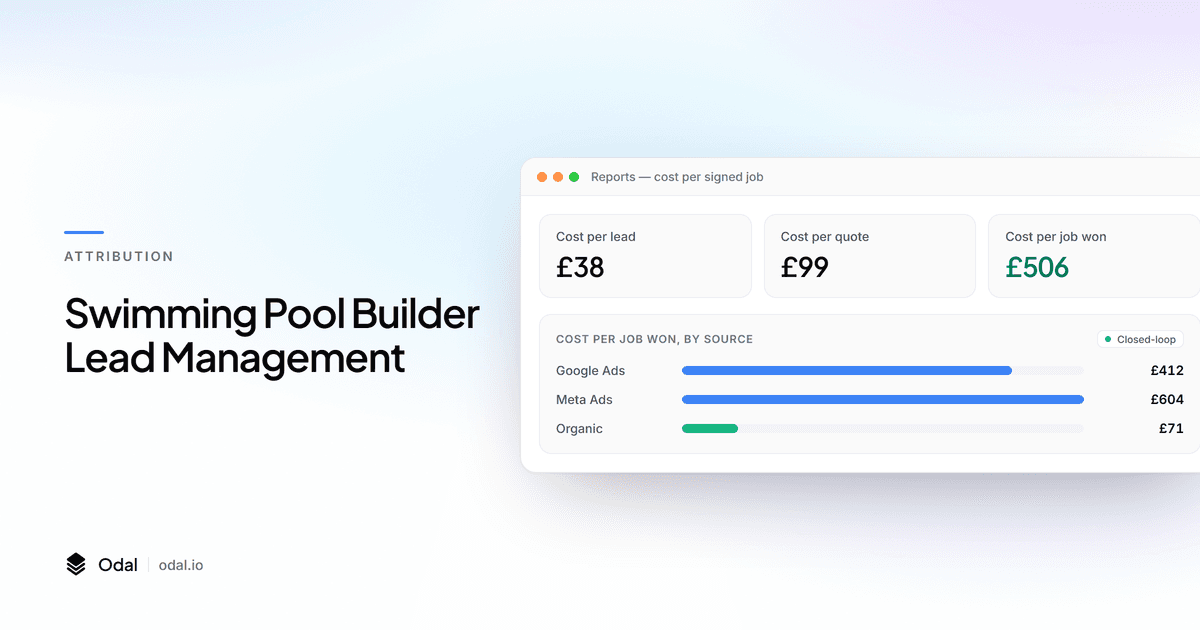
Most critically, they provide no meaningful way to connect your marketing spend to actual project completion and payment. You might know that Google Ads generated enquiries last month, but which of those enquiries converted into signed contracts? Which marketing channels produce clients who actually proceed to build, rather than endless tyre-kickers getting quotes they never intend to accept?
The Attribution Gap in Pool Marketing
The challenge runs deeper than project management. Pool construction involves some of the longest sales cycles in residential construction. A homeowner might enquire in January, receive quotes in February, secure planning permission in April, and sign a contract in June for work starting in September.
During those months, they'll interact with your business through multiple channels. They might have found you initially through Google Ads, visited your website several times, called after seeing your van in their neighbourhood, and finally converted after a referral from a satisfied customer. Standard tracking systems lose the thread completely.
This attribution gap means you're making marketing decisions based on incomplete data. You might increase spend on Facebook Ads because they generate lots of enquiries, not realising that Google Ads produces fewer enquiries but higher conversion rates to actual contracts. You might cut budget from local advertising that appears to generate no direct leads, missing that it provides crucial brand recognition that influences final buying decisions.
The commercial impact is significant. Pool projects typically range from substantial investments to premium installations. Getting attribution wrong doesn't just waste a few pounds of ad spend. It can mean missing the marketing channels that drive your most valuable contracts whilst over-investing in channels that generate enquiry volume but no actual revenue.
What Pool Builders Actually Need
Effective CRM for pool builders requires understanding the specific workflow from enquiry to completion. This isn't about managing contacts or tracking deals. It's about connecting marketing performance to project delivery across timelines that can span an entire construction season.
First-party data integration becomes crucial. Your CRM needs to capture not just the initial enquiry source, but every subsequent interaction. When a lead from Google Ads converts three months later after a site visit and planning approval, your system should connect those events automatically. When a referral client mentions they first heard about you through local advertising, that attribution should be captured and tracked.
The system must handle the complexity of pool project workflows whilst maintaining clear visibility of marketing performance. This means tracking enquiry sources through multiple project phases: initial consultation, site survey, detailed quotation, planning applications, contract signing, and project scheduling. Pool construction also requires adherence to health and safety regulations throughout these phases, adding another layer of complexity to project management.
Mobile Functionality for Site-Based Work
Pool construction is inherently field-based work. Your team spends more time on-site than in the office. Any CRM system that requires desktop access for critical functions will fail to capture the real-time updates that keep projects on track and clients informed.
Mobile functionality must go beyond basic contact access. Your estimators need to update project status during site visits. Your installation teams need to log progress and capture issues as they arise. Your project coordinators need to manage subcontractors and suppliers from wherever the work is happening.
Real-time updates prevent the communication gaps that damage client relationships. When excavation reveals unexpected ground conditions, that information needs to reach your estimating team immediately. When planning approval comes through ahead of schedule, your scheduling team needs to know instantly to optimise project timelines.
The mobile interface should integrate seamlessly with your marketing attribution tracking. When a site visit converts to a signed contract, that conversion should be automatically attributed to the original marketing source, regardless of where the update is made. This level of attribution-focused CRM functionality ensures you never lose sight of which marketing efforts drive actual revenue.
Pool builders typically use specialist software for different aspects of their business: design software for pool layouts, and various marketing platforms for lead generation. Your CRM should work alongside these existing tools rather than requiring you to replace them.
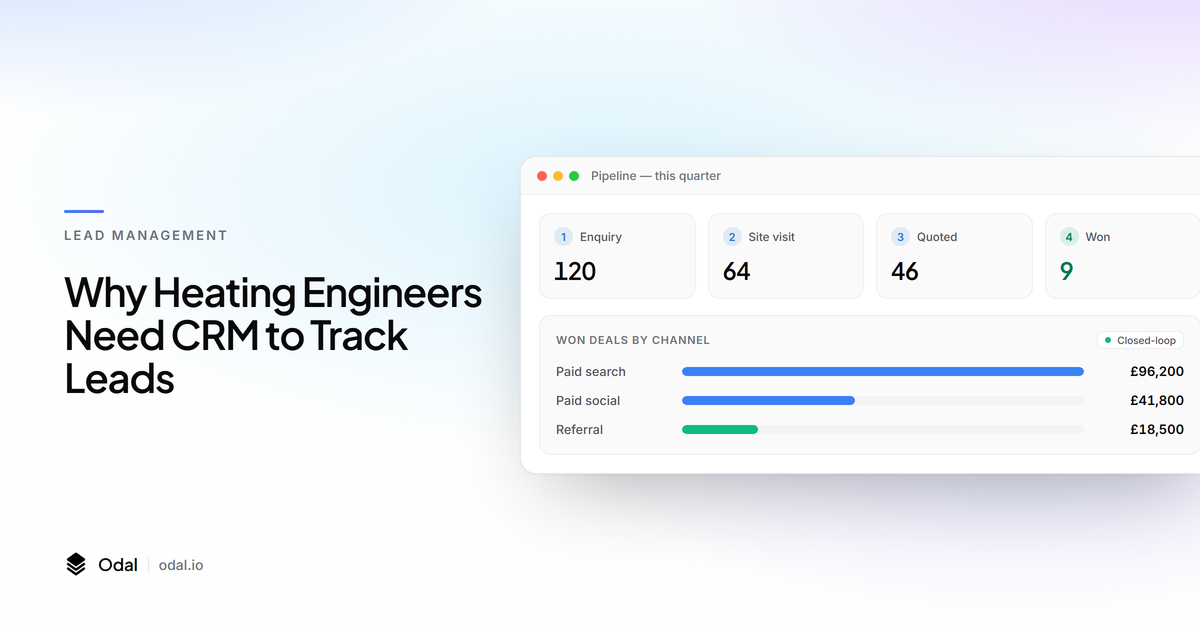
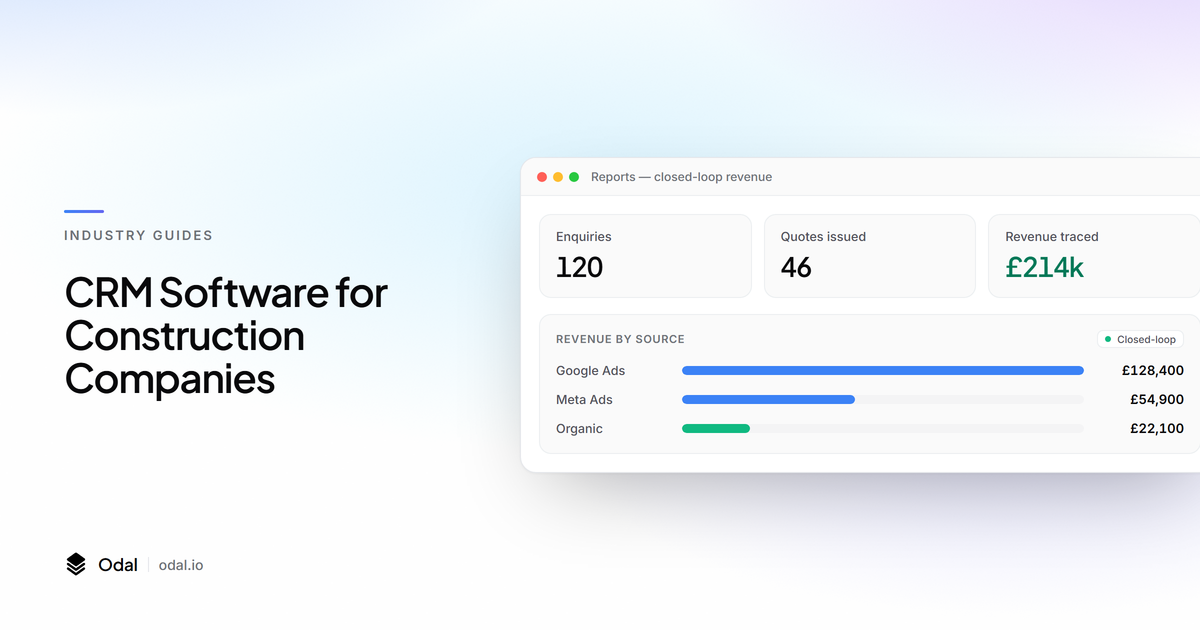
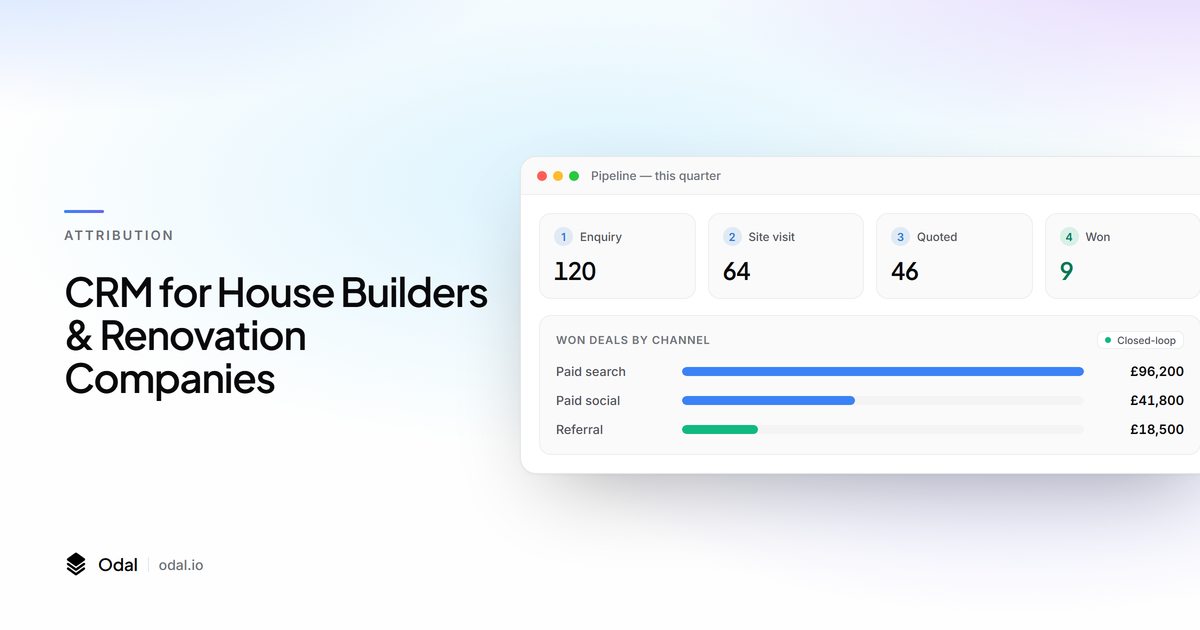
The most critical integration is with your marketing platforms. Google Ads and Meta Ads should feed directly into your CRM with proper source attribution. This creates the closed-loop reporting that connects marketing spend to actual signed contracts and completed projects.
This integration ensures that project profitability insights flow back into your marketing analysis. You can identify not just which channels drive the most contracts, but which channels drive the most profitable contracts. This distinction becomes crucial when optimising marketing spend for maximum return. Similar to how home extension specialists benefit from proper attribution, pool builders need systems that connect marketing investment to project outcomes.
The ultimate test of any CRM system for pool builders is whether it provides clear visibility of marketing performance across your extended sales cycles. You need to know which marketing channels produce enquiries that convert to contracts, which contracts proceed to completion, and which completed projects generate the highest profit margins.
This requires tracking that goes beyond initial enquiry source. Your system should capture the complete customer journey: initial marketing touchpoint, enquiry submission, site visit scheduling, quotation delivery, planning application support, contract negotiation, and project scheduling. Modern pool operators also benefit from industry guidance on supervision technology, which can influence project specifications and client requirements.
Seasonal patterns become visible when you have complete attribution data. You might discover that Google Ads enquiries in January convert at higher rates than those in June, or that local advertising has delayed attribution effects that only become apparent months later.
The data should inform budget allocation decisions with confidence. Instead of guessing which marketing channels work best, you can allocate spend based on actual conversion data and project profitability analysis. This approach mirrors successful strategies used by solar panel installers who track long sales cycles from initial enquiry to installation completion.
Ready to connect your pool building marketing to actual project revenue? Start your free Odal trial and see exactly which marketing channels drive your most profitable contracts.
Frequently Asked Questions
How long should I track marketing attribution for pool projects?
Pool projects typically have sales cycles of 3-12 months from initial enquiry to signed contract. Track attribution for at least 12 months to capture seasonal patterns and delayed conversions. Many pool builders find their most profitable projects come from enquiries that convert 6+ months after initial contact.
What's the difference between enquiry tracking and revenue attribution?
Enquiry tracking shows which marketing channels generate initial contact. Revenue attribution connects those enquiries to actual signed contracts and completed projects. For pool builders, this distinction is crucial because enquiry volume doesn't correlate with contract conversion rates across different marketing channels.
Can CRM systems handle planning permission delays and project changes?
Effective pool builder CRM systems should accommodate timeline changes and project modifications whilst maintaining marketing attribution. When planning delays push a project back six months, the system should preserve the connection between original marketing source and eventual contract completion.
How do I track referrals and word-of-mouth marketing?
Referral tracking requires systematic enquiry qualification. Train your team to ask every new enquiry how they heard about you, and capture this information consistently. Many referrals have secondary marketing influences, they might mention a referral but also recall seeing your advertising, which provides valuable attribution data.
What marketing metrics matter most for pool builders?
Focus on cost-per-signed-contract rather than cost-per-lead. Track conversion rates from enquiry to site visit, site visit to quotation, and quotation to signed contract. Monitor average project value by marketing channel and seasonal conversion patterns to optimise budget allocation timing.
Should I use separate systems for marketing tracking and contact management?
Integrated systems provide better attribution visibility than separate tools. When contact management and marketing tracking are connected, you can analyse which marketing channels produce enquiries that convert to profitable contracts, versus those that generate high volumes but poor conversion rates.